Kitchen Backsplash Ideas Beyond Subway Tile
A kitchen backsplash has an important practical job: protecting the wall behind your countertops, sink, and cooking areas from splashes and everyday messes. But it can also be one of the most memorable design elements in your kitchen.
Classic subway tile still has its place, but it is far from your only option. Today, homeowners planning kitchen remodels in Tuscaloosa, Birmingham, Mountain Brook, and surrounding Alabama communities can choose from stone slabs, handcrafted tile, mosaics, square tile, specialty shapes, and other materials that add more personality to a kitchen.
At Toulmin Kitchen & Bath, we especially love using the backsplash to complement the cabinetry, countertops, range hood, and other architectural details rather than treating it as a separate design decision. That layered approach is also at the heart of today's mixed-material kitchen designs.
If you're searching for kitchen backsplash ideas beyond traditional subway tile, here are some of our favorite approaches.
Rethink the Shape and Layout of Classic Tile
Moving beyond subway tile doesn't always require choosing a bold color or elaborate pattern. Changing a simple tile's proportions, texture, and installation direction can completely transform the backsplash.
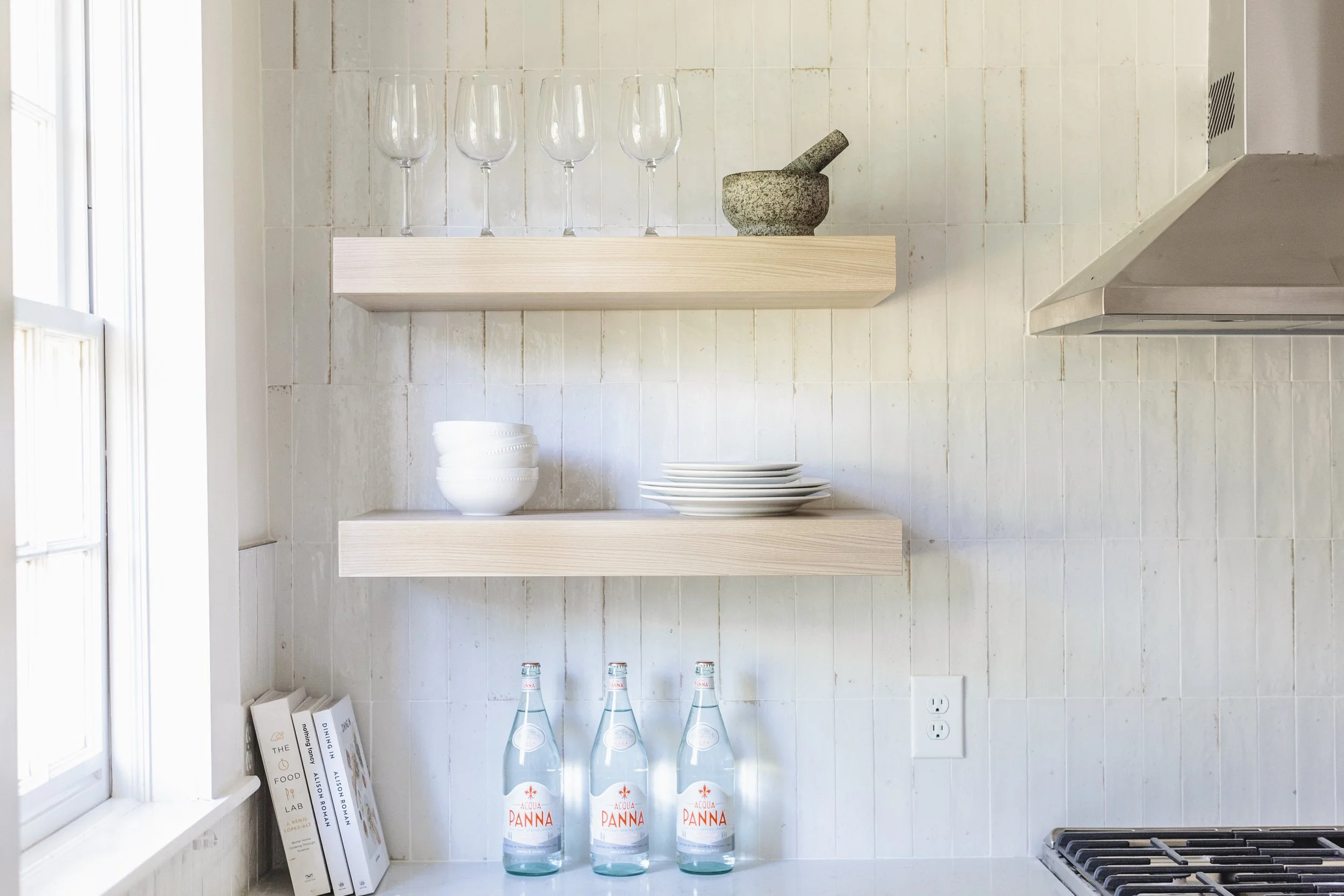
You can install elongated handmade-look tile vertically and carry it up the wall, creating height and subtle movement. This approach works especially well if you want a distinctive backsplash without competing with the cabinetry, countertops, or other kitchen finishes.
Create a Seamless Look With a Full-Height Stone Backsplash
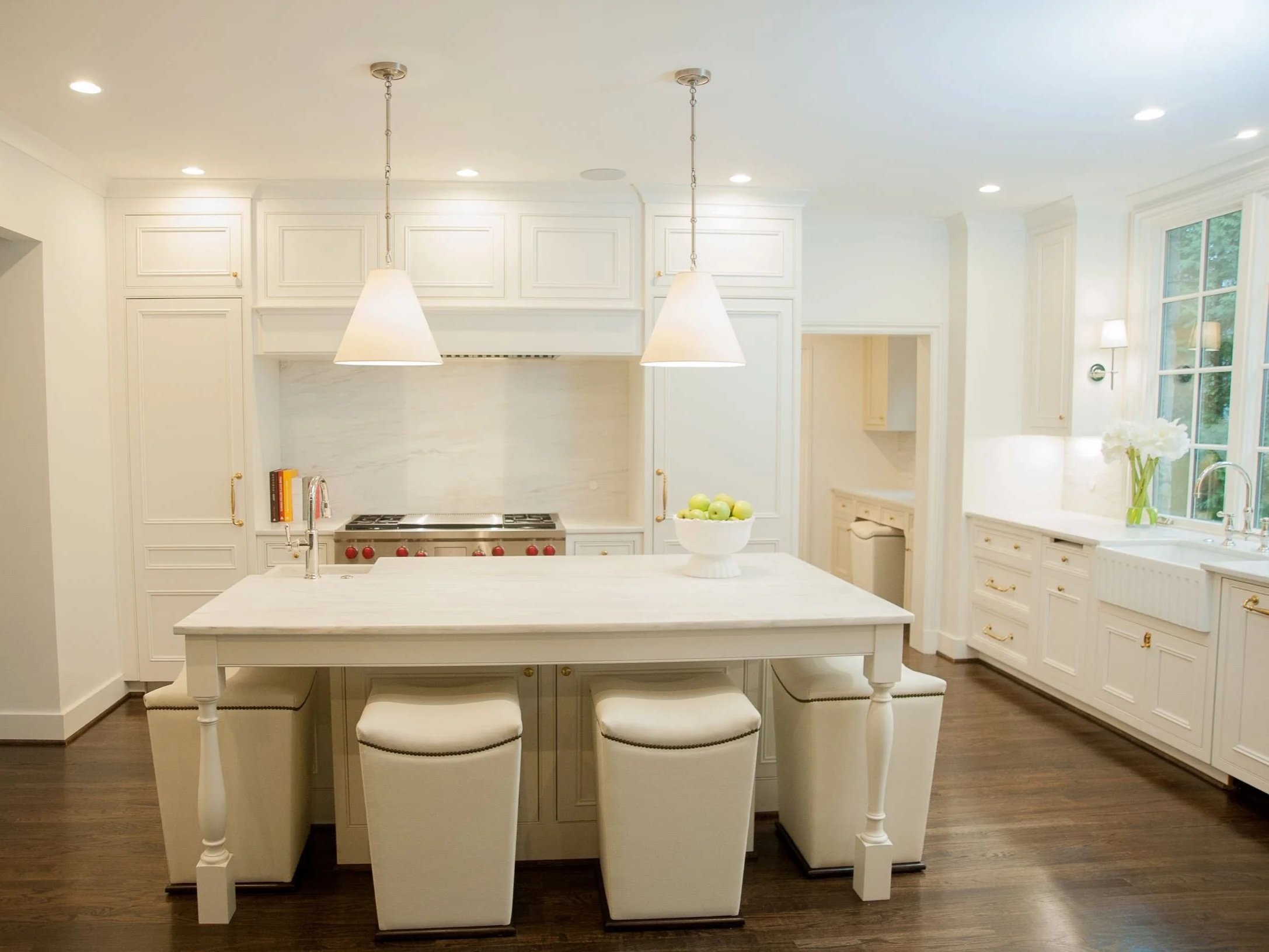
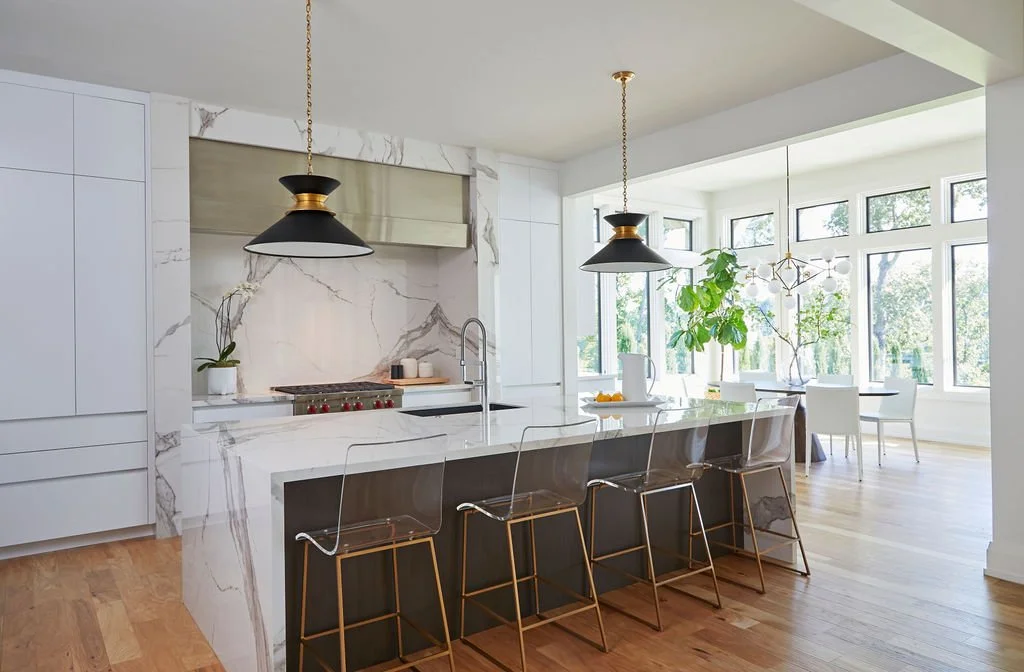
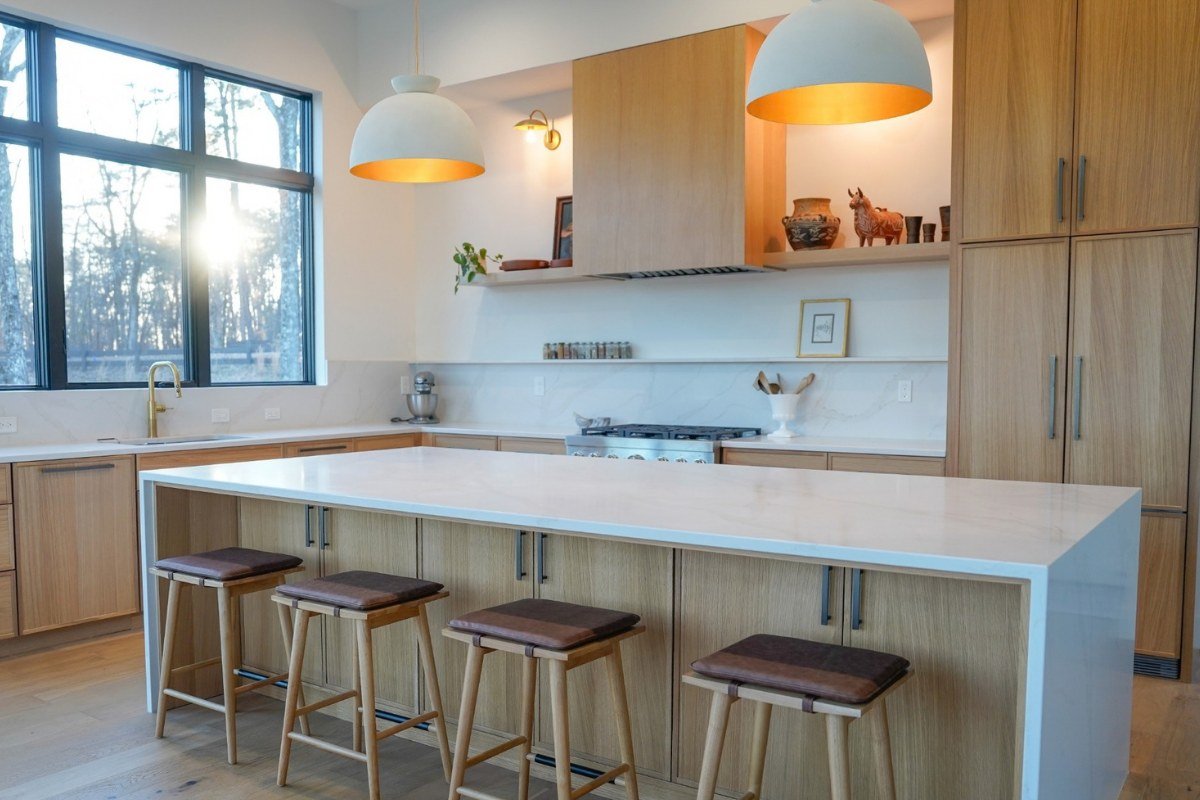
One of the most striking alternatives to tile is extending a slab material vertically from the countertop onto the wall.
Quartz, quartzite, marble, granite, and other stone surfaces can create a clean, uninterrupted backdrop. Depending on the material and layout, the backsplash can coordinate with the countertops or become a dramatic focal point.
A full-height stone backsplash works particularly well when you want to:
Highlight dramatic veining or movement
Reduce the number of grout lines in the kitchen
Create a streamlined, contemporary appearance
Draw attention to the range and vent hood
Carry a countertop material vertically for a more cohesive design
Try Small-Format Mosaic Tile
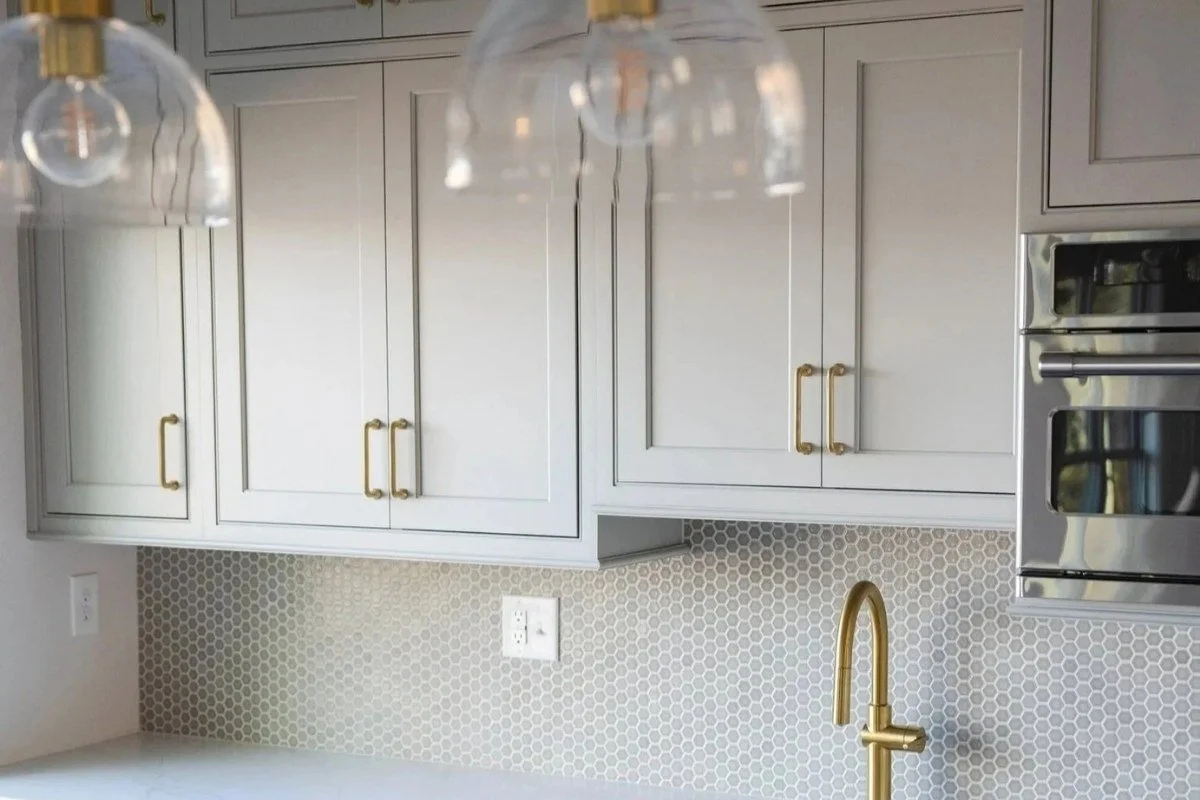
A backsplash doesn't need a large-scale pattern to make an impact. Small-format mosaics add texture and detail without necessarily overwhelming the room.
Small mosaic tile can be especially effective when you want to add:
Subtle pattern
Texture
A handcrafted feeling
Contrast against larger countertop surfaces
Visual interest without a bold color
For homeowners who love a classic kitchen but want something less expected than rectangular subway tile, a hexagon or other geometric mosaic can be an excellent middle ground.
Let Handmade-Look Tile Add Character
Not every tile needs perfectly uniform edges and surfaces.
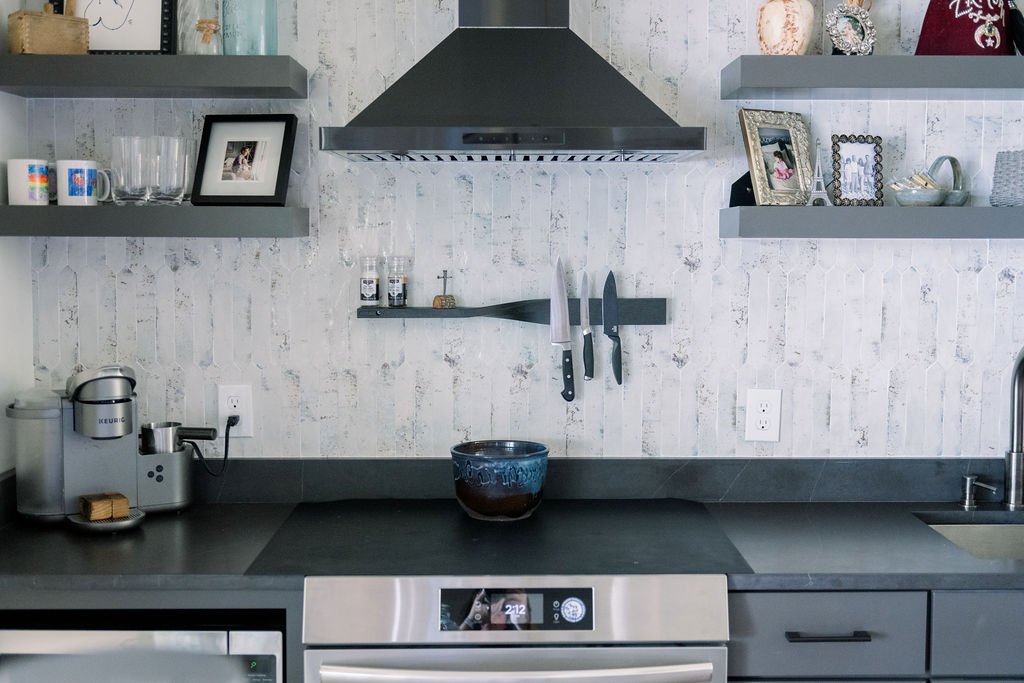
Handmade and handmade-look tiles can introduce subtle variation in color, texture, glaze, and shape. Those imperfections catch the light differently across the wall, helping even a relatively simple backsplash feel layered and distinctive.
This approach is especially appealing in kitchens that combine new cabinetry and appliances with warmer or more character-rich finishes.
Consider pairing handcrafted tile with:
Natural or wood-look cabinetry
Floating shelves
Simple countertops
Matte black or aged metal finishes
A statement range hood
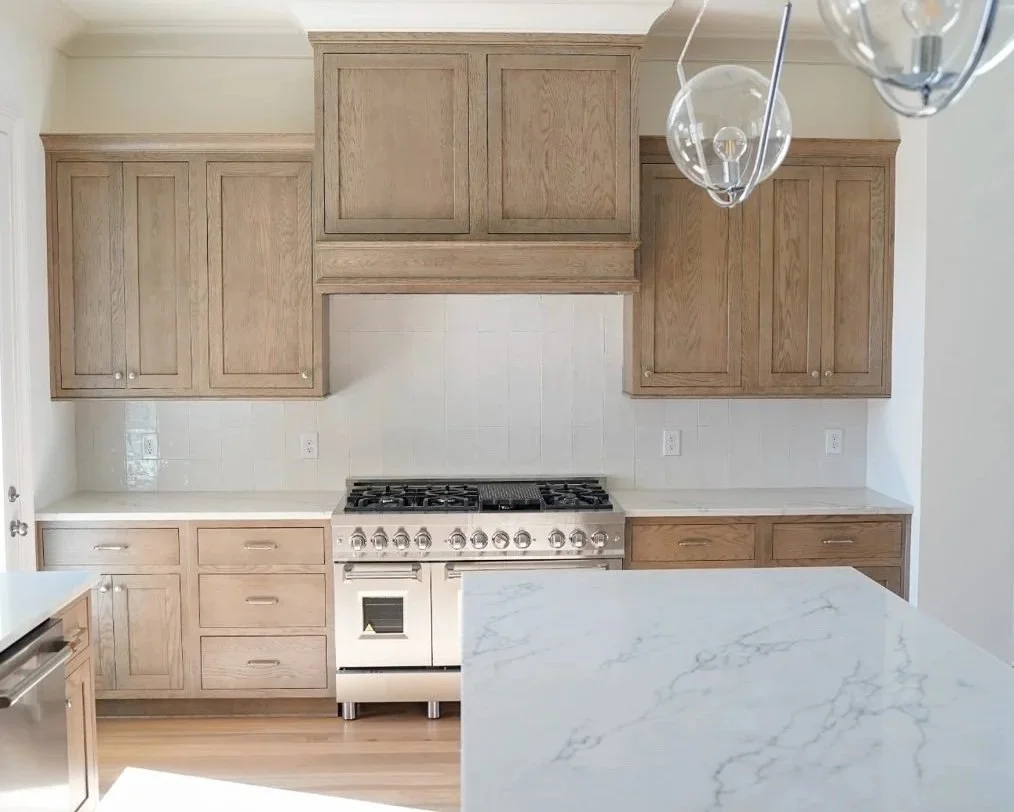
Consider Simple Square Tile
Moving beyond subway tile doesn't necessarily mean choosing something elaborate.
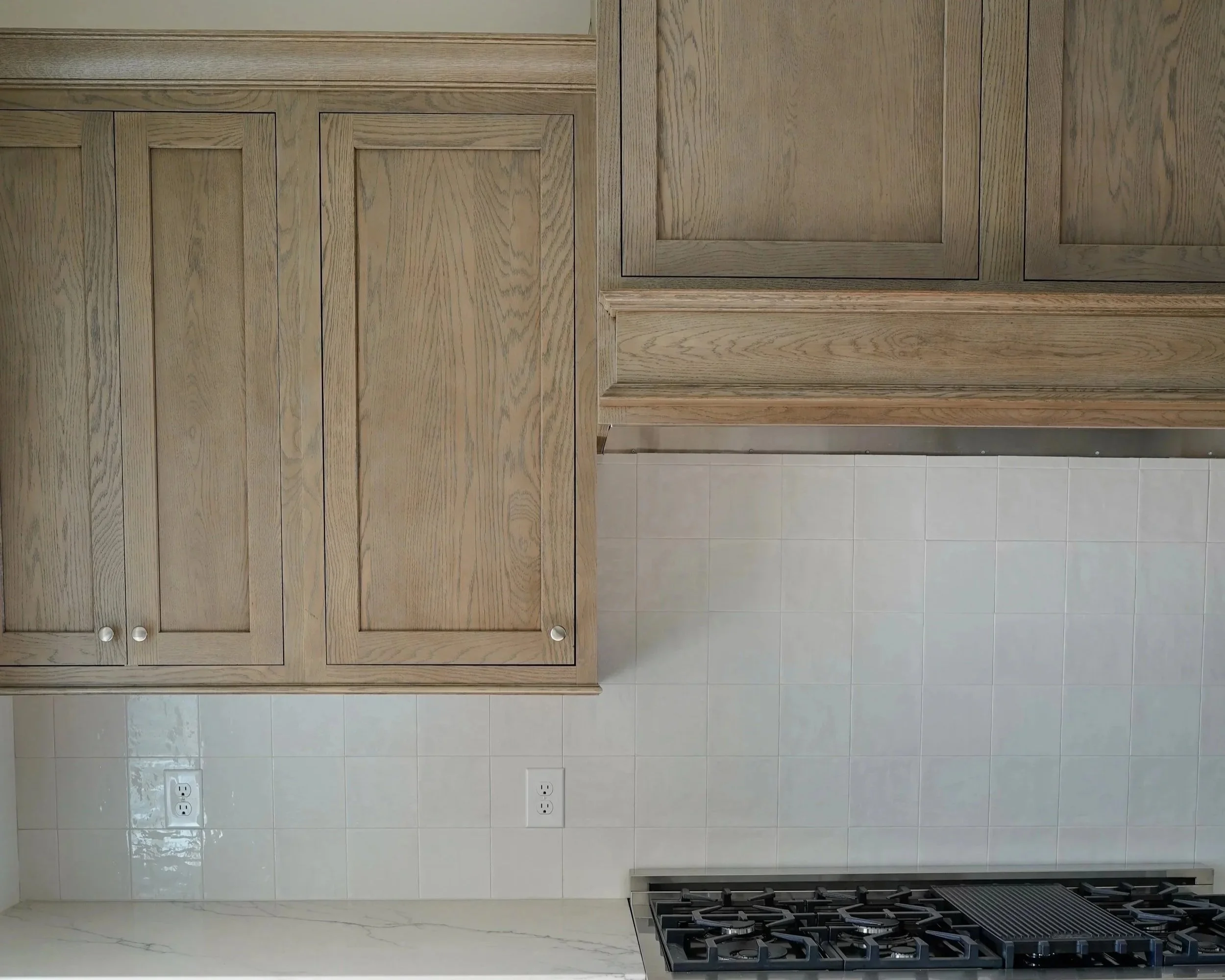
Square tile can feel remarkably fresh because its proportions create a completely different rhythm on the wall. In a neutral color, it provides texture while remaining understated enough to work alongside natural wood cabinetry and statement appliances.
This can be a particularly useful approach if your kitchen already contains visually strong features such as:
Natural wood cabinetry
Prominent wood grain
Statement hardware
Professional appliances
Dramatic countertops or lighting
Use Tile to Add Pattern and Color
A backsplash is one of the easiest places to introduce color or pattern without committing the entire kitchen to it.
Patterned tile can work beautifully as an accent behind a range, along a beverage station, or across a smaller section of cabinetry. It can also help break up an otherwise neutral kitchen.
The key is balance. If the backsplash has a pronounced color or pattern, consider letting some surrounding materials be quieter. Simple cabinetry and countertops can give an intricate backsplash room to stand out.
For more ideas about balancing contrasting surfaces, finishes, wood tones, and colors, see our guide to mixed cabinet styles and layered cabinetry. Toulmin's recent work shows how layered materials can create a more personalized kitchen rather than relying on one finish throughout the room.
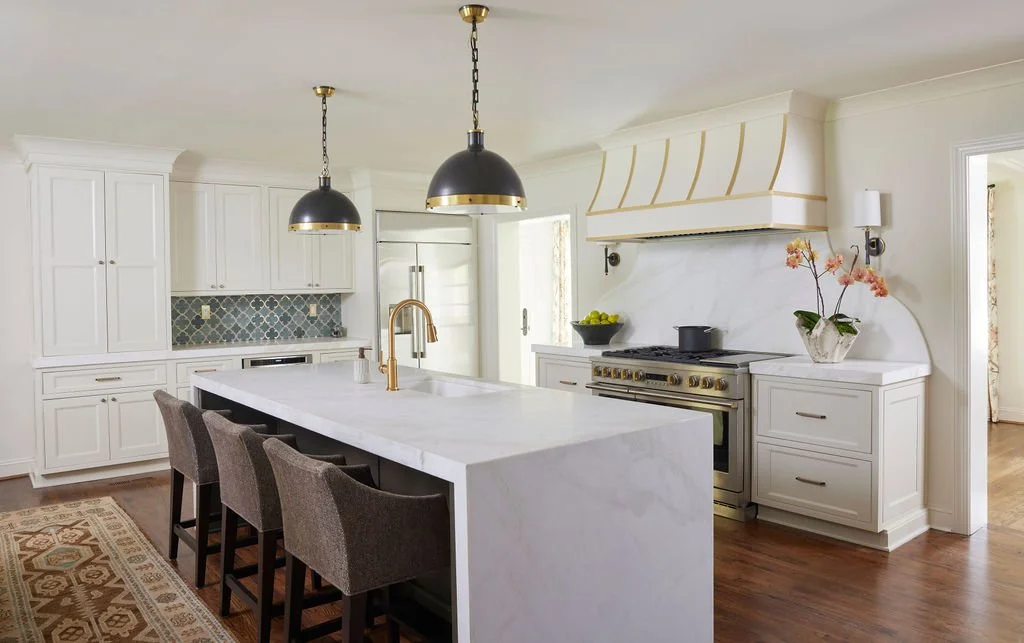
Take the Backsplash All the Way Up
One of the biggest decisions isn't simply what backsplash material to use. It's where to stop it.
Instead of automatically ending the backsplash at the bottom of the upper cabinets, consider extending it:
To the ceiling behind the range
Around a custom vent hood
Behind open shelving
Across an entire feature wall
Around windows when the layout allows
Taking a backsplash higher can make the wall feel more intentional and turn the material into an architectural feature.
This treatment can be particularly effective in a kitchen with fewer upper cabinets. Rather than leaving a large blank wall, the backsplash creates continuity while floating shelves provide practical display space.
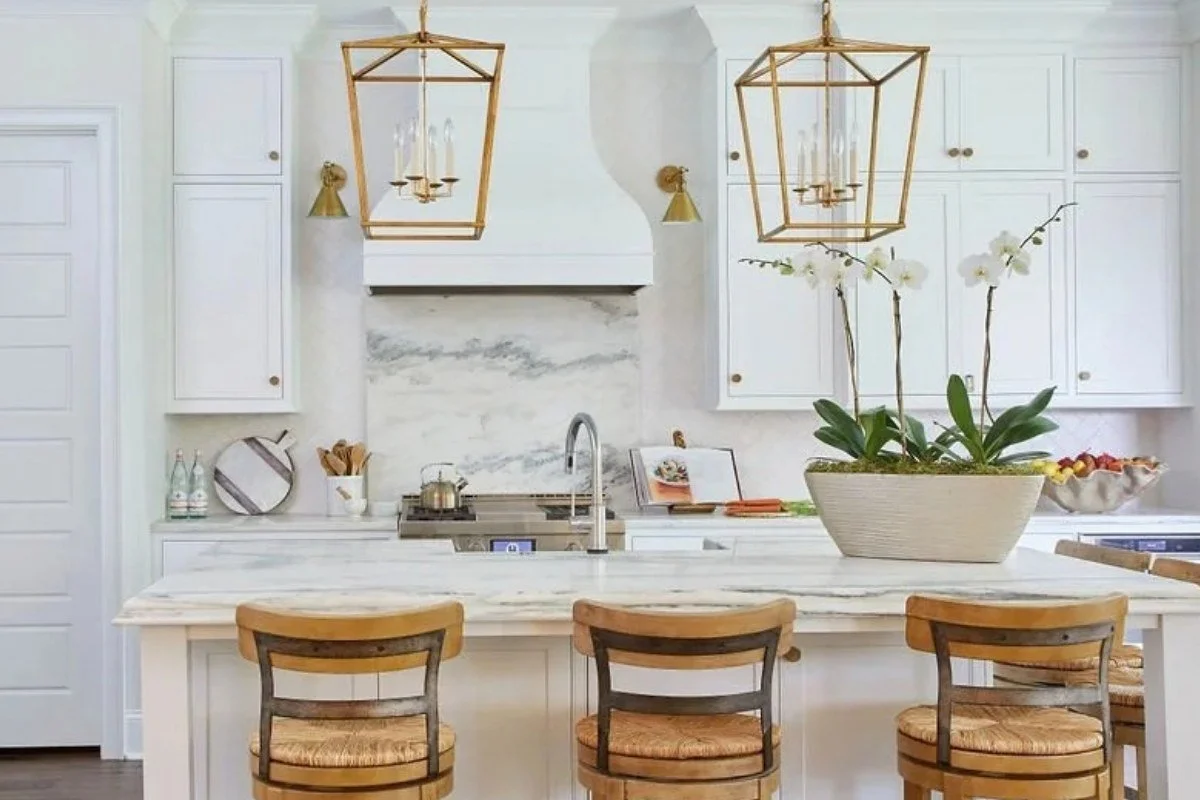
Pair a Backsplash With Open Shelving
If you're considering open shelving, think about the shelves and backsplash as a pair rather than choosing each independently.
A backsplash can become the background for the objects displayed on the shelves, while the shelving introduces warmth, depth, and horizontal lines. Wood shelves against light tile are especially effective because the contrast makes both materials more noticeable. The combination can also help bridge the gap between traditional cabinetry and a more open, contemporary kitchen design.
The goal is to make the materials feel connected. For example, wood shelving can repeat the tone of nearby cabinetry or flooring, while the backsplash relates to the countertops.
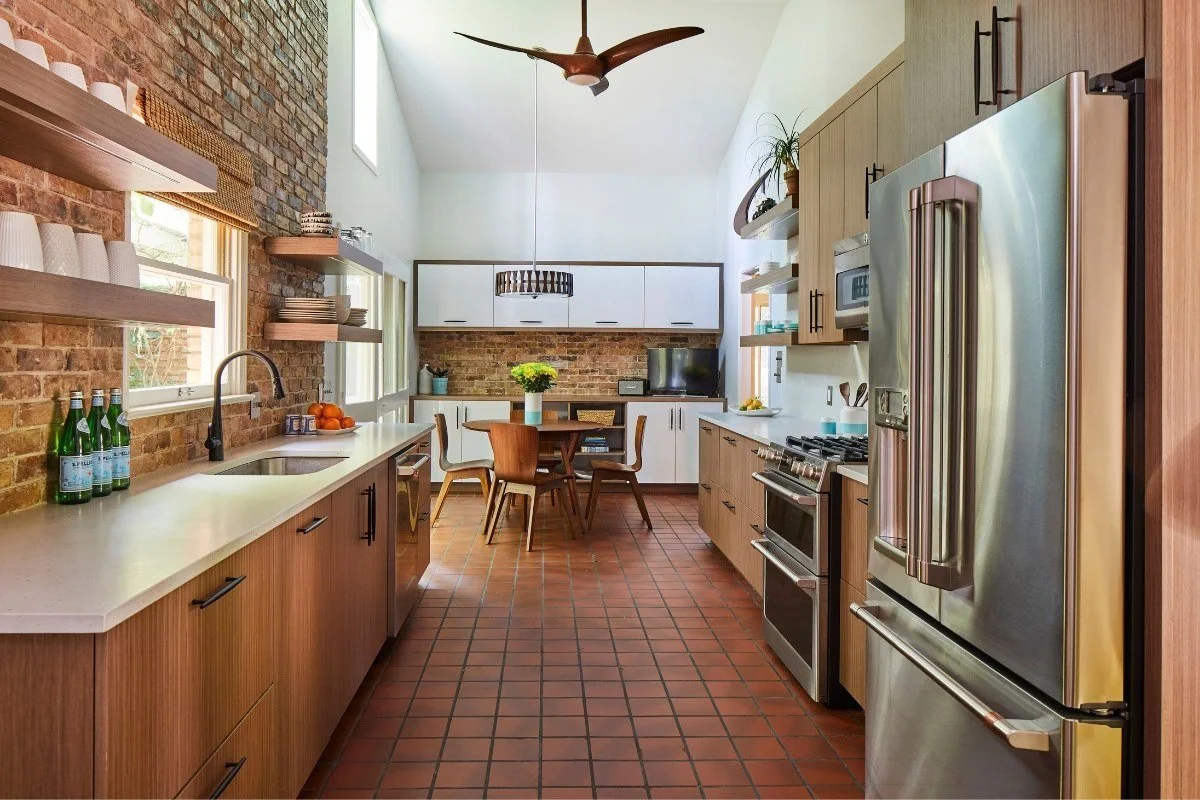
Don't Forget the Range Wall
The area behind the range naturally attracts attention, making it one of the best places to create a focal point.
You might use:
A dramatic stone slab
A different tile pattern
Handmade tile extending to the ceiling
A framed tile detail
A backsplash that visually connects with a custom range hood
Before choosing a highly decorative range backsplash, however, consider everything else happening on that wall. The range, hood, cabinetry, hardware, and backsplash should work as one composition rather than compete for attention.
Our guide to professional cooktop and range backsplash ideas explores additional material options for hardworking areas of your kitchen.
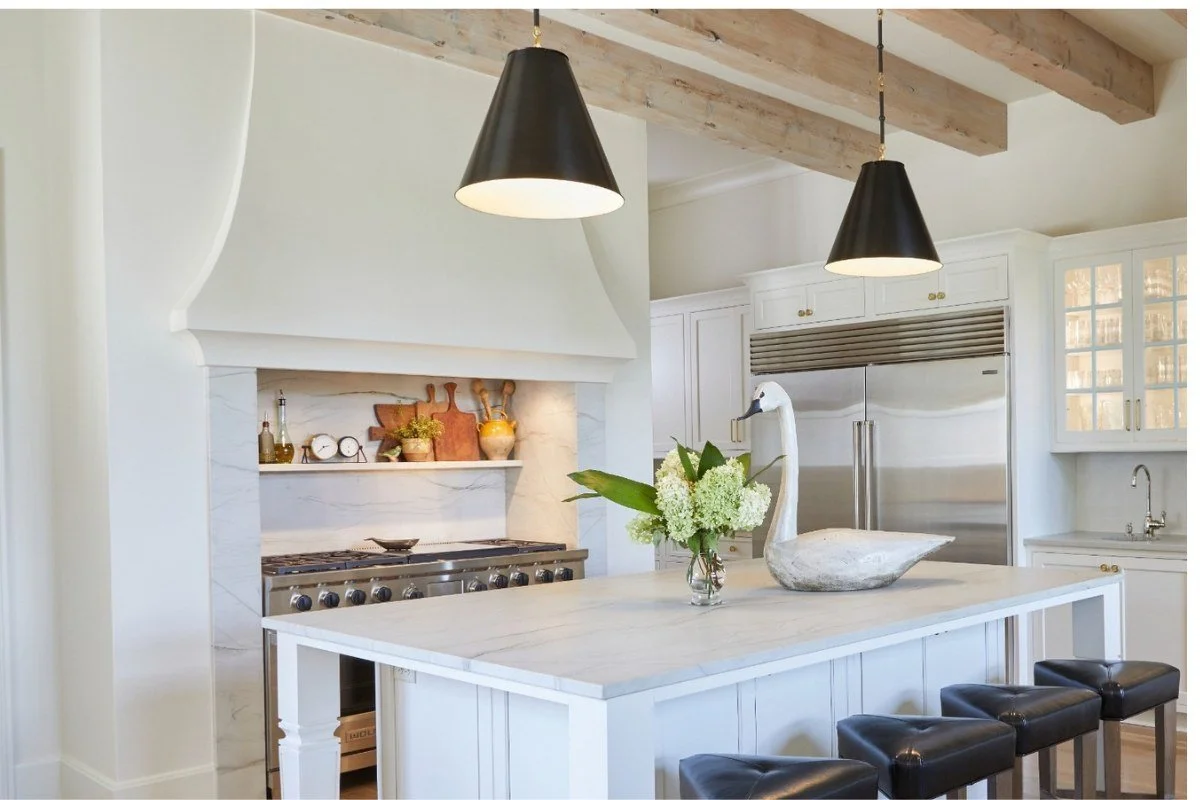
Add a Ledge to a Full-Splash Backsplash
Another detail we love is incorporating a ledge into a full-splash backsplash. A slim ledge provides a natural stopping point within the backsplash while adding both dimension and function to the wall.
Depending on the kitchen, a backsplash ledge can provide space for a few carefully selected items, such as spices, small artwork, cooking essentials, or decorative pieces. It can also create a strong horizontal line that helps visually connect different areas of the kitchen.
This treatment works particularly well in kitchens with fewer upper cabinets or a more open wall design. Instead of filling the space with cabinetry, a full backsplash and shallow ledge keep the kitchen feeling open while still adding architectural interest.
For a cohesive look, the ledge can:
Match or coordinate with the countertop material
Repeat the wood tone of the cabinetry
Coordinate with nearby floating shelves
Run behind or alongside the cooking area
Be kept shallow, so it adds function without taking over the workspace
The key is to think of the backsplash, ledge, cabinetry, countertops, and range hood as one composition. When you plan those elements together, even a simple ledge can make the kitchen feel more customized and thoughtfully designed.
How to Choose the Right Kitchen Backsplash
With so many backsplash materials available, it's easy to fall in love with a tile sample before considering how it fits into the entire kitchen.
Start with the bigger picture.
Your backsplash should relate naturally to your kitchen cabinets, countertops, flooring, appliances, hardware, and lighting. A backsplash that looks beautiful on its own isn't necessarily the one that will look best once every material is installed together.
Before making your selection, consider:
Maintenance: How easy will the material and grout be to clean?
Scale: Does the pattern complement your kitchen's size and proportions?
Color: Does it coordinate with the undertones in your cabinets and countertops?
Texture: Does the room need additional texture, or are other finishes already visually busy?
Height: Should the backsplash stop beneath the cabinets or extend higher?
Focal points: Do you want the backsplash to command attention or support another feature?
Longevity: Will you still enjoy the material after today's trends have changed?
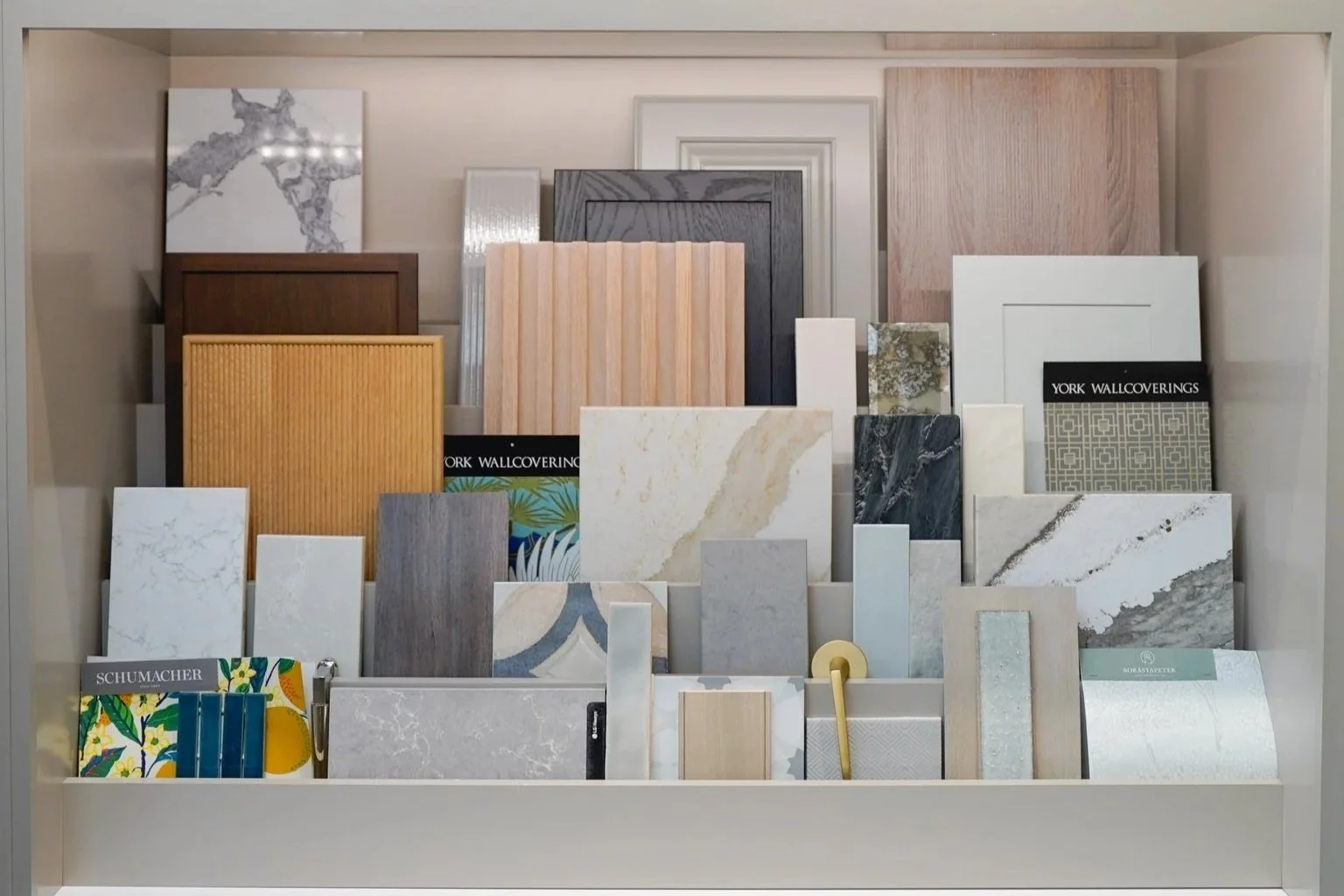
Working with a kitchen designer can be especially helpful because cabinetry, countertop, backsplash, hardware, and lighting selections are easier to evaluate when they're considered as part of one cohesive design.
Frequently Asked Questions About Kitchen Backsplashes
What can I use instead of subway tile for a kitchen backsplash?
Many options include natural stone or engineered stone slabs, mosaics, square tile, handmade-look ceramic tile, specialty-shaped tile, patterned tile, glass, and metal. The right material depends on your kitchen's overall style, maintenance preferences, and budget.
Are full-height stone backsplashes a good choice?
A slab backsplash can create a clean, continuous surface with fewer grout lines than a traditional tiled wall. Marble, quartzite, granite, quartz, and other surfaces can all produce very different looks, so consider material-specific care and installation requirements.
Should my backsplash match my countertop?
It doesn't need to match exactly. The backsplash and countertop should work together, but contrast can make a kitchen more interesting. For example, a quiet backsplash can balance a strongly veined countertop, while a simple countertop can provide room for patterned or textured tile.
How high should a kitchen backsplash go?
There isn't one correct backsplash height. It may end beneath upper cabinetry, extend behind a range hood, surround windows, or continue all the way to the ceiling. The best choice depends on the cabinetry layout, architecture, budget, and desired visual effect.
Can I use different backsplash materials in the same kitchen?
Yes. Different materials or patterns can help define a range wall, bar, coffee station, or other focal area. The selections should share enough color, texture, or visual character to make the overall kitchen feel cohesive.
Can Toulmin Kitchen & Bath help select backsplash materials?
Yes. Backsplash selection can be incorporated into the larger kitchen design process so cabinetry, countertops, tile, hardware, lighting, plumbing, and other finishes work together. Toulmin works with homeowners planning kitchen projects in Tuscaloosa, Birmingham, Mountain Brook, and surrounding Alabama communities.
Design a Kitchen That's Uniquely Yours
A great backsplash does more than fill the wall between your countertops and cabinetry. It can introduce texture, highlight your range, connect materials throughout the room, or become one of the defining features of your kitchen.
At Toulmin Kitchen & Bath, our designers help homeowners throughout Tuscaloosa, Birmingham, Mountain Brook, and surrounding Alabama communities create kitchens in which every selection works together—from custom and semi-custom cabinetry to countertops, backsplashes, hardware, lighting, and layout.
Whether you love a dramatic stone backsplash, handcrafted tile, subtle mosaics, or a clean and understated design, we can help you choose materials that complement both your home and the way you live.
More Kitchen Design Ideas You’ll Love