Best Flooring for Your Tuscaloosa Kitchen Remodel
Choosing cabinets and countertops may get most of the attention during a kitchen renovation, but don't overlook what is under your feet. The right kitchen flooring can have a major impact on how your new space looks, feels, and performs every day.
For homeowners planning a kitchen remodel in Tuscaloosa, Alabama, flooring needs to do more than look beautiful. Kitchens are busy spaces where spills, muddy shoes, pets, children, dropped dishes, and everyday foot traffic are part of life. Your flooring should also complement your cabinetry, countertops, and surrounding rooms so the finished kitchen feels cohesive.
Hardwood, engineered hardwood, luxury vinyl plank (LVP), tile, and RevWood can all be excellent choices, but each has different strengths. Here's what to consider before choosing the best kitchen flooring for your Tuscaloosa remodel.
What Should You Look for in Kitchen Flooring?
Choosing the right kitchen flooring is about finding the best balance of style, performance, and practicality for your home. Because the kitchen sees everything from spills and dropped dishes to heavy foot traffic and daily cleanup, your flooring needs to stand up to everyday life while complementing the rest of your kitchen design.
As you compare flooring options for your kitchen remodel, consider:
Durability: How well will it withstand everyday traffic, scratches, dents, and dropped objects?
Water resistance: How will it handle spills or moisture around the sink, refrigerator, and dishwasher?
Maintenance: Does it require special cleaning, refinishing, or grout maintenance?
Comfort: How does it feel when you're standing at the island or cooking for long periods?
Appearance: Does it complement your kitchen cabinets, countertops, and overall home?
Pets and children: Will scratches, spills, and everyday messes be a concern?
Budget: Consider both the initial investment and the flooring's potential lifespan.

Hardwood Flooring: Timeless and Beautiful
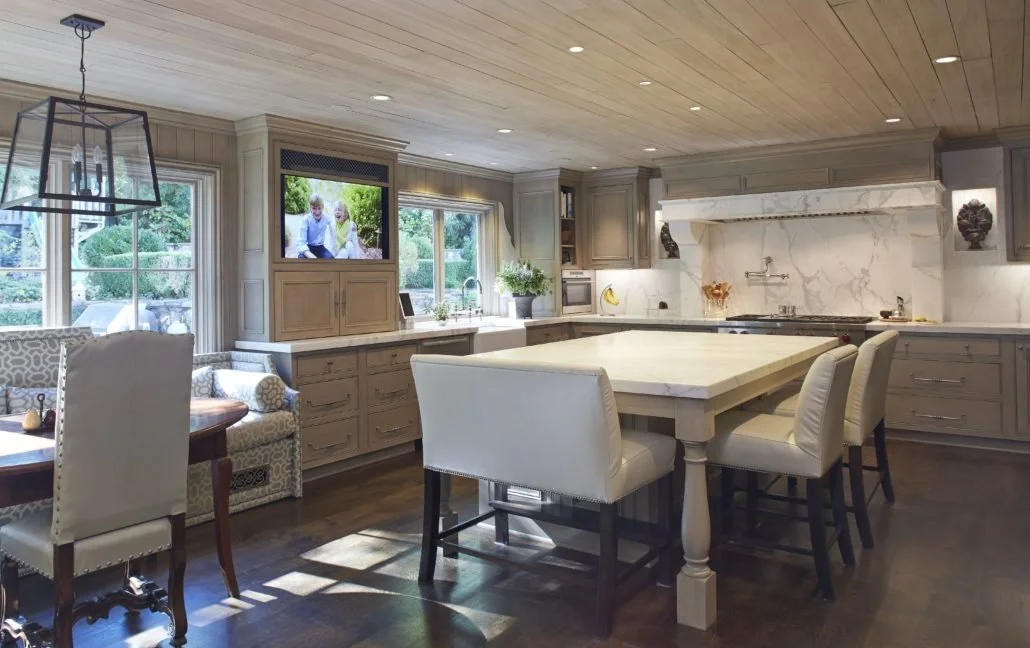
Hardwood remains a favorite in kitchens for a reason. Natural wood brings warmth and character to a space and works beautifully with everything from traditional cabinetry to clean, contemporary kitchen designs.
Hardwood can be especially appealing in an open-concept kitchen remodel where the kitchen connects directly to a dining or living space. Continuing the same wood floor throughout these areas creates a seamless visual transition and makes the entire space feel larger and more cohesive.
Pros of Hardwood Kitchen Flooring
Authentic, natural appearance
Warm and comfortable underfoot
Works with a wide range of kitchen styles
Can often be refinished rather than replaced
Creates a seamless look between kitchens and adjoining living spaces
Potential Drawbacks
Hardwood requires more attention around water than some of the other materials on this list. Spills should be cleaned promptly, and prolonged moisture from a leaking dishwasher, refrigerator, or sink can damage wood.
Dogs' nails, moving chairs, and heavy kitchen traffic can also scratch the finish over time. Some homeowners appreciate the character that develops as a wood floor ages, while others prefer a floor that maintains a more uniform appearance.
Who Is Hardwood Best For?
Consider hardwood if appearance, warmth, longevity, and continuity with surrounding rooms are top priorities and you're comfortable giving the floor a little more care.
Budget level: $$$–$$$$
Engineered Wood Floors: Real Wood with Added Stability
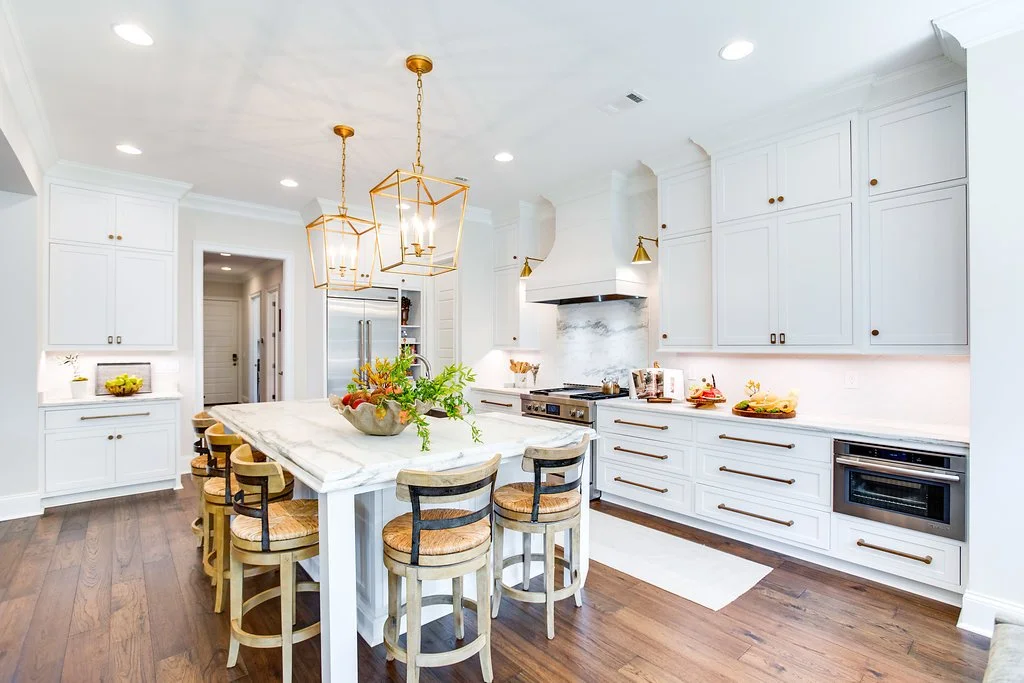
Engineered hardwood is sometimes confused with laminate or vinyl, but it's actually a real wood flooring product. It typically features a genuine hardwood surface over multiple underlying layers engineered for greater dimensional stability.
That construction helps engineered hardwood better manage changes in environmental conditions than traditional solid hardwood, although it is still a wood product and shouldn't be treated as completely waterproof.
For a Tuscaloosa kitchen renovation, engineered hardwood can be an attractive middle ground for homeowners who love genuine wood but want additional stability.
Pros of Engineered Hardwood
Genuine hardwood surface
Warm, upscale appearance
Greater dimensional stability than solid hardwood
Comfortable underfoot
Available in many wood species, plank widths, colors, and finishes
Potential Drawbacks
Like solid hardwood, engineered wood still requires prompt attention to spills and leaks. Refinishing options also vary significantly depending on the thickness and construction of the product's real-wood wear layer.
Who Is Engineered Hardwood Best For?
Engineered hardwood is a great choice if you love the warmth and character of real wood but want a flooring option that handles temperature and humidity changes better than solid hardwood.
Budget level: $$$–$$$$
Luxury Vinyl Plank: Practical for Busy Kitchens
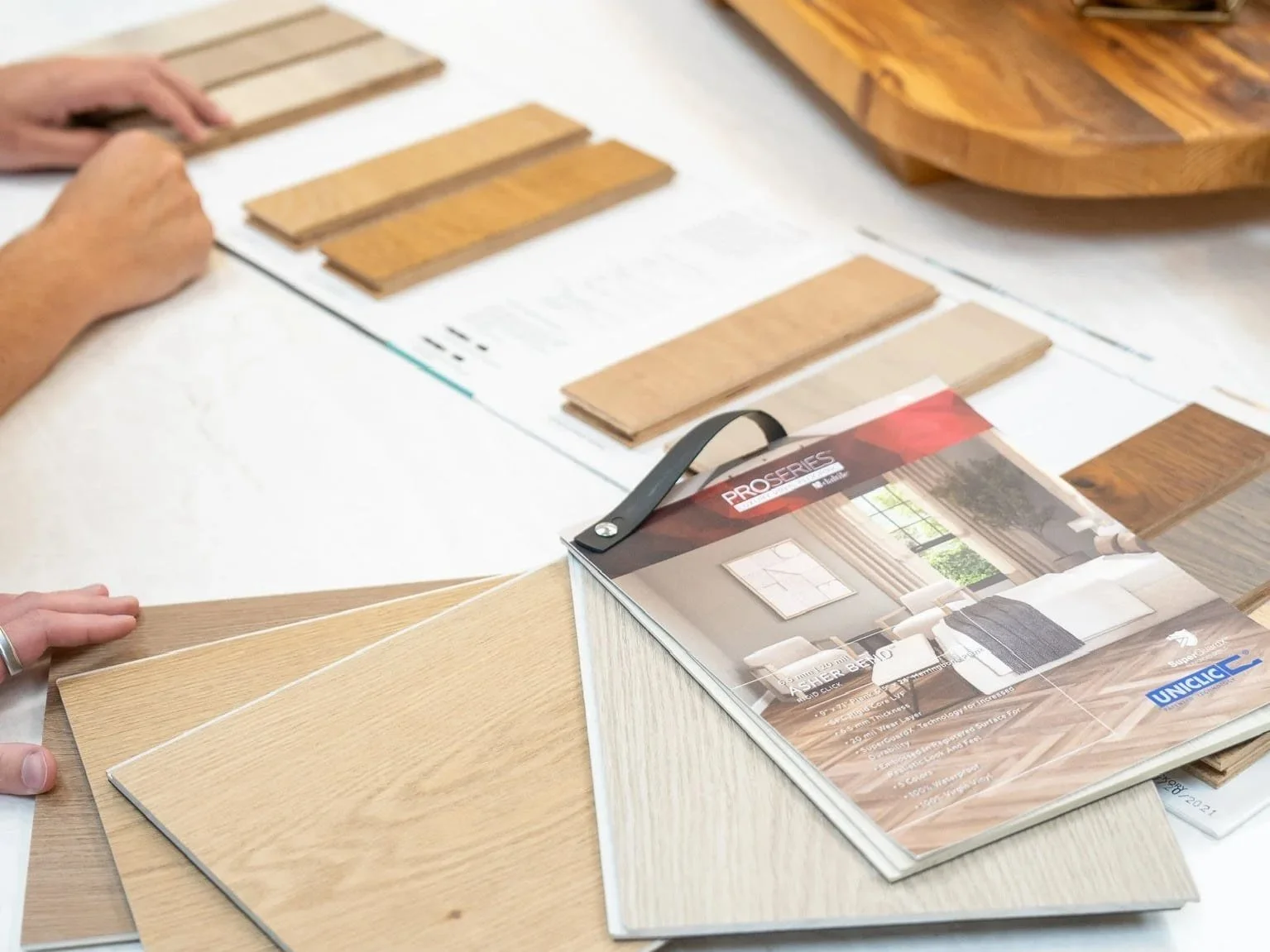
Luxury vinyl plank, commonly called LVP, has become a popular kitchen flooring choice because it combines practical performance with increasingly realistic wood visuals. Quality LVP can offer excellent water resistance, easy maintenance, and a somewhat softer feel underfoot than tile. Those characteristics can make it particularly attractive for busy households.
Pros of LVP Kitchen Flooring
Excellent water resistance with qualifying products
Easy to clean and maintain
Comfortable compared with harder surfaces
Available in many wood-look colors and textures
Generally budget-friendly compared with natural hardwood
Good choice for households with pets and children
Potential Drawbacks
LVP doesn't offer the authenticity or refinishing potential of genuine hardwood. Quality also varies considerably between products, so it's important to look beyond color and price when comparing options. Damaged vinyl plank requires repair or replacement, not sanding and refinishing.
Who Is LVP Best For?
LVP makes sense for busy households, pet owners, families with children, and homeowners who prioritize water resistance and easy maintenance. It can also be an appealing choice when you want the appearance of wood without committing to the maintenance requirements of natural hardwood.
Budget level: $$–$$$
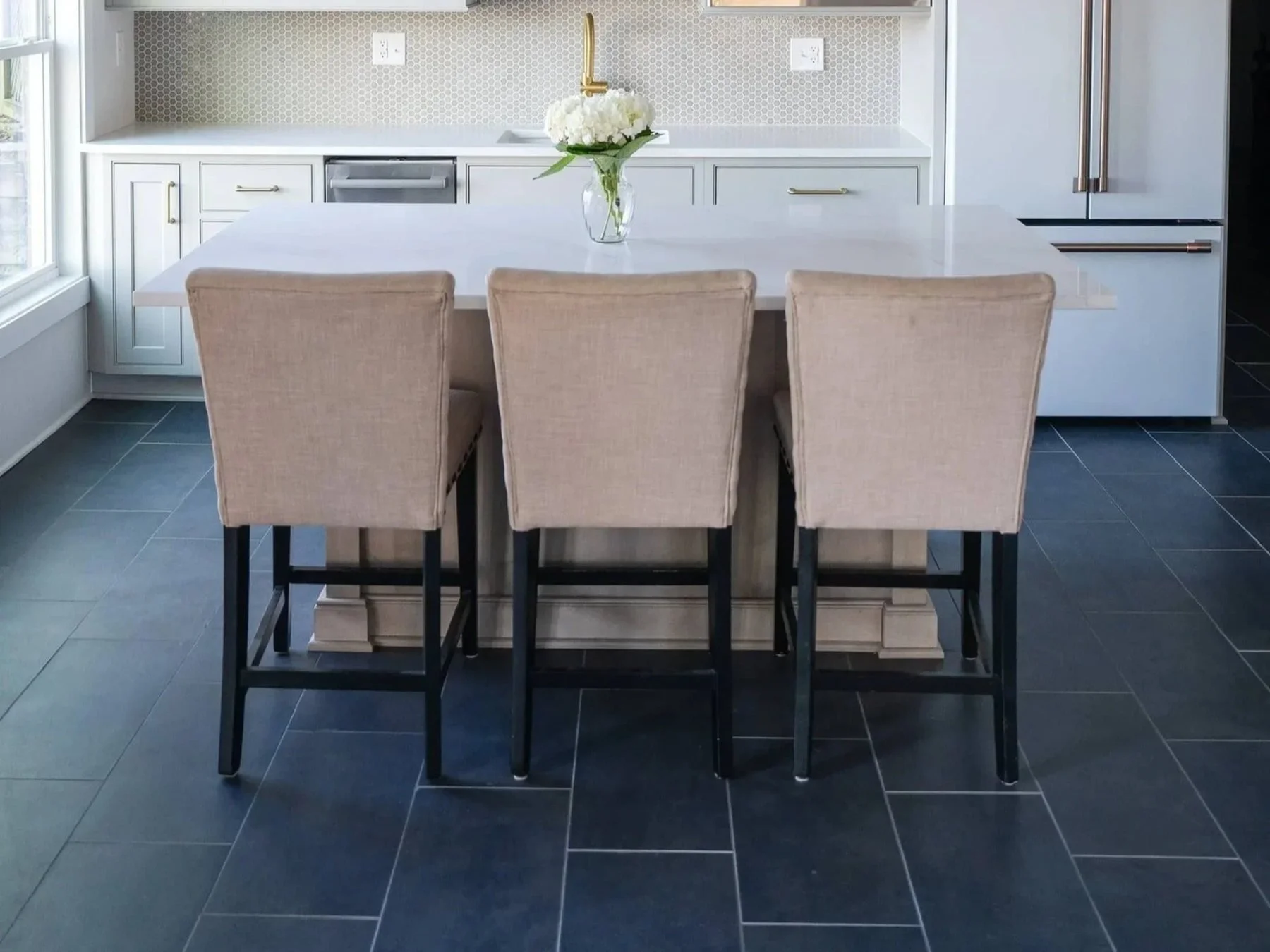
Tile Flooring: Durable and Water-Resistant
Tile remains one of the most durable kitchen flooring options available. Porcelain and ceramic tile can handle water, spills, heavy traffic, and frequent cleaning extremely well. Tile also offers tremendous design flexibility. Depending on the look of your Tuscaloosa kitchen remodel, you can choose from natural-stone-inspired finishes, subtle neutrals, large-format tiles, traditional patterns, and many other styles.
Pros of Tile Kitchen Flooring
Excellent water resistance
Extremely durable
Easy-to-clean surface
Resistant to scratches and everyday wear
Huge variety of colors, shapes, sizes, and patterns
Works particularly well in high-traffic kitchens
Potential Drawbacks
Tile is considerably harder underfoot than wood or LVP, which may matter if you spend a lot of time cooking. Dishes and glasses are also more likely to break when dropped onto tile. Grout introduces another maintenance consideration. The type of grout and installation will influence how much ongoing cleaning or sealing may be necessary.
Who Is Tile Best For?
Tile is a great fit for homeowners who prioritize water resistance and long-term durability and don't mind a firmer surface underfoot.
Budget level: $$–$$$$ (depending on the tile and installation)
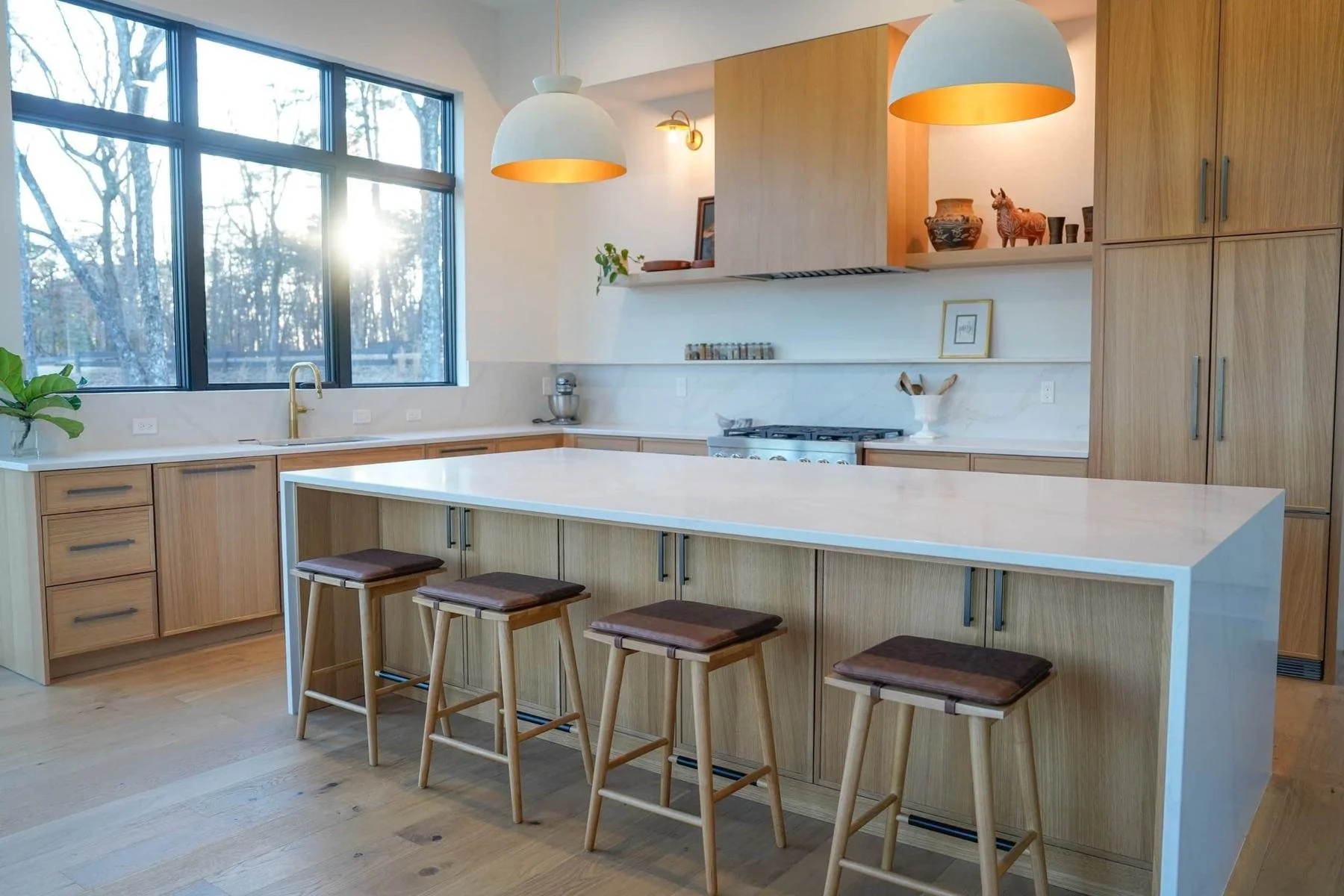
Hardwood vs. LVP vs. RevWood: What's the Difference?
Because all three can create a wood-floor look, homeowners often compare hardwood, LVP, and RevWood during the design process.
The biggest difference is what's beneath the surface.
Hardwood offers genuine natural wood, long-term refinishing potential, and a timeless look, but it requires more care around water and scratches.
LVP is a resilient flooring product designed to deliver strong water resistance and easy maintenance. It's often a practical choice for households with frequent spills and messes.
RevWood is a laminated wood flooring product. It combines a wood-based construction with a highly durable surface and realistic printed wood visuals. Premium RevWood collections add waterproof systems and pet-focused protection.
If you're comparing these materials for a kitchen remodel in Tuscaloosa, think beyond which sample you like best. Consider how your household will actually use the kitchen five, ten, or even fifteen years from now.
What's the Best Kitchen Flooring for Dogs and Kids?
For an active household, durability and easy cleanup usually matter more.
LVP and qualifying RevWood products are particularly attractive for families because they combine easy maintenance with strong water, stain, and scratch performance. Tile is another exceptionally durable option and can withstand a tremendous amount of everyday activity.
Hardwood and engineered hardwood can absolutely work in family kitchens, too, but scratches, spills, and pet nails may become more visible over time.
If you have a busy household, ask yourself:
How often do spills happen in our kitchen?
Do we have large or active dogs?
Will children be eating or doing homework at the island?
Do we want a pristine floor or are we comfortable with natural wear?
How much maintenance are we willing to do?
The answers may matter more than choosing whichever flooring material happens to be most popular.
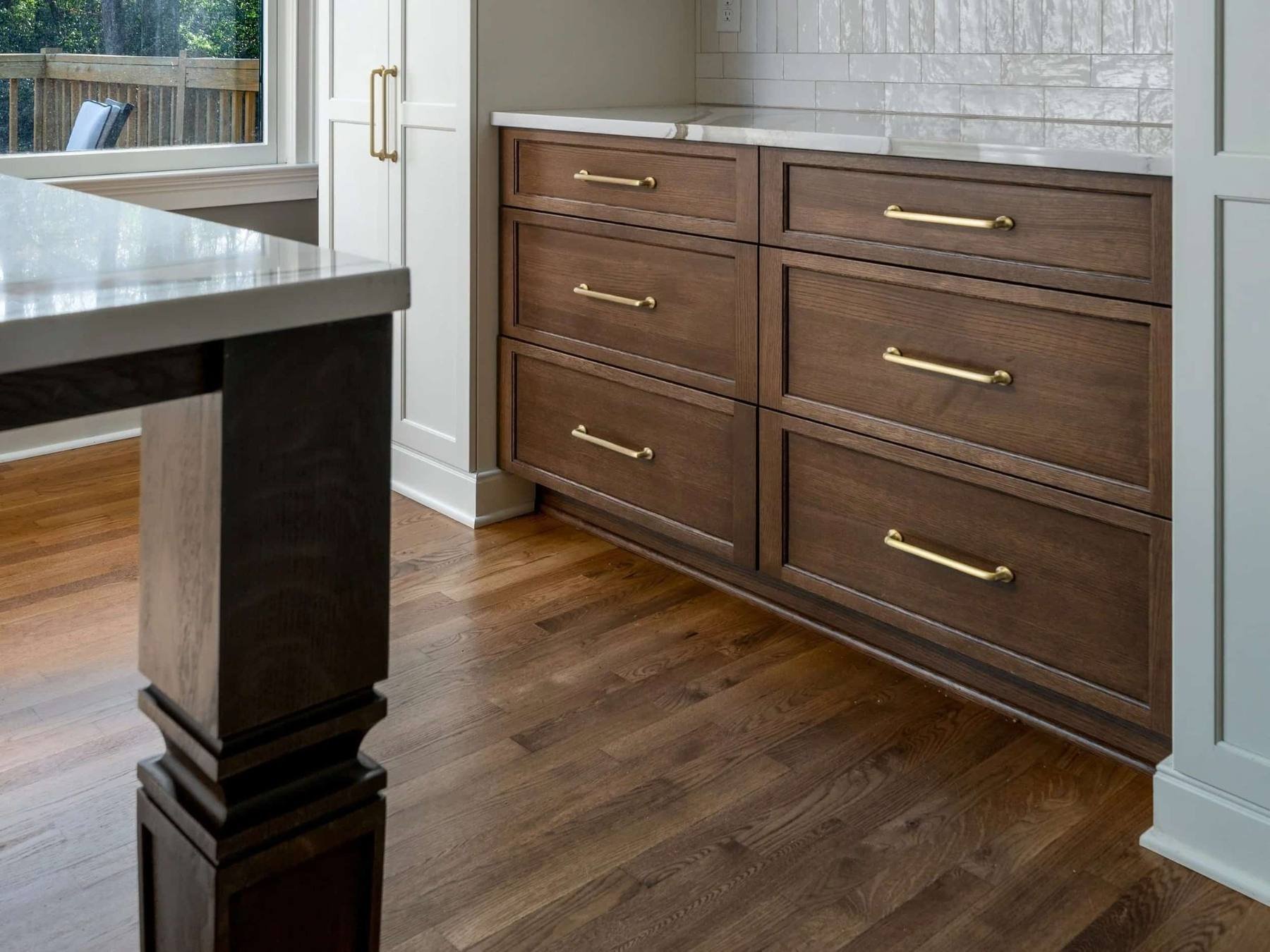
How Should Flooring Coordinate with Kitchen Cabinets?
Flooring shouldn't be selected in isolation. During a well-planned Tuscaloosa kitchen remodel, the floor, cabinets, countertops, backsplash, paint, hardware, and lighting should work together as one design.
If you're using natural wood cabinetry, pay particular attention to the undertones in your flooring. The woods don't necessarily have to match—in fact, some contrast can make a room much more interesting—but they should feel intentional together.
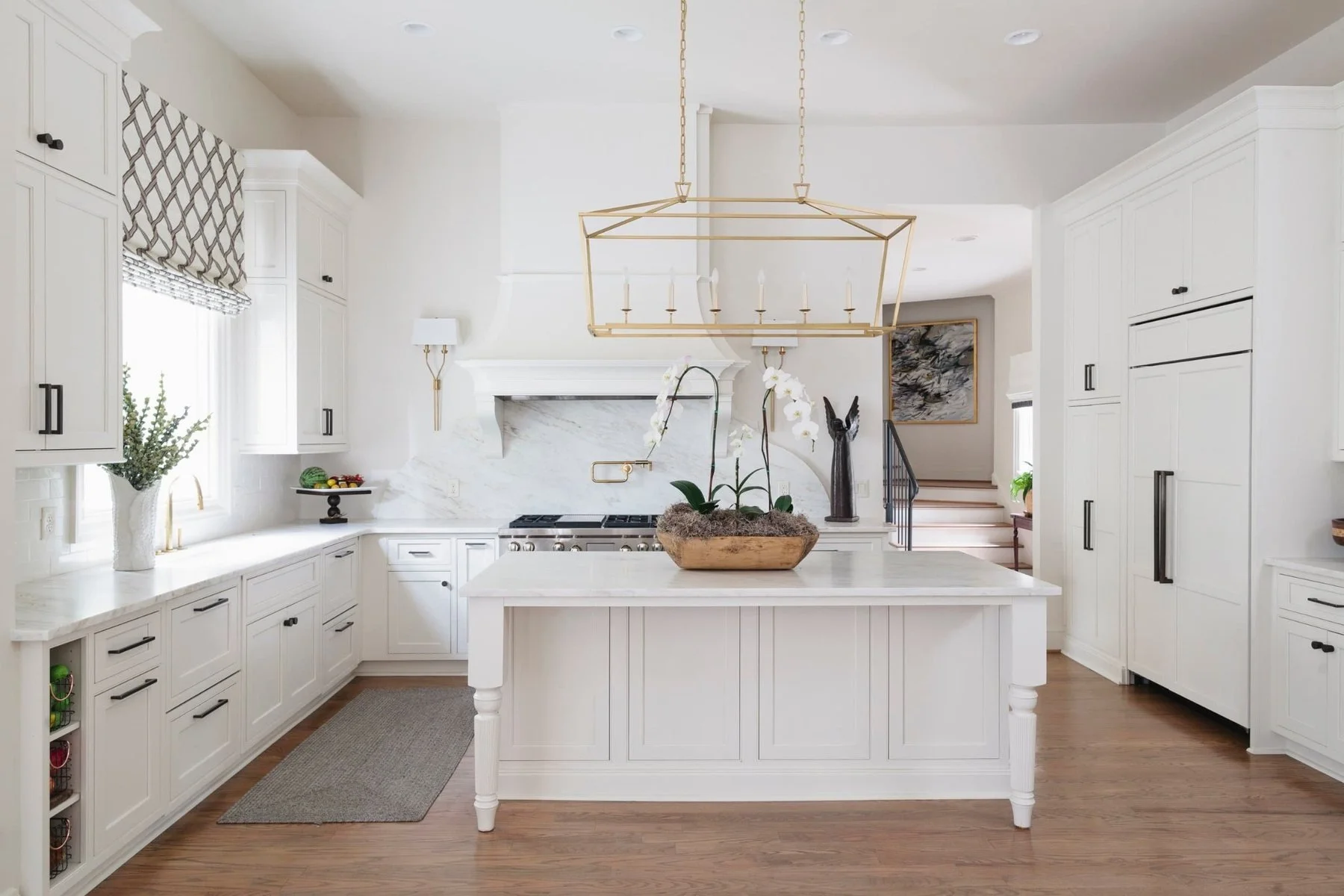
For painted cabinetry, flooring can add warmth and texture. Natural wood floors and realistic wood-look products can soften white, cream, green, blue, or other painted cabinets.
Also consider what's already in the adjoining rooms. In an open floor plan, changing flooring materials abruptly can visually divide the space. Sometimes continuing one material is the better design choice; in other homes, a thoughtfully planned transition works beautifully.
This is one reason we prefer to make flooring selections as part of the overall kitchen design, rather than treating the floor as an afterthought.
How Much Should You Budget for Kitchen Flooring?
Flooring prices vary substantially based on the manufacturer, collection, material, installation method, subfloor condition, room layout, and amount of preparation required.
As a general planning framework:
$–$$: Entry-level flooring choices
$$–$$$: Quality LVP and laminate/RevWood products and some tile selections
$$$–$$$$: Engineered hardwood, premium tile, and many solid hardwood options
$$$$: Premium hardwoods, specialty tile, complex patterns, and installations requiring significant preparation
Rather than selecting flooring based only on the price per square foot, consider the complete installed cost and how the material fits your long-term plans for the home. Removing an existing floor, leveling or repairing the subfloor, changing transitions, installing specialty patterns, and working around an existing layout can all affect the final investment.
So, What Is the Best Flooring for a Kitchen Remodel?
No single answer fits every Tuscaloosa homeowner.
If natural beauty and long-term character matter most, hardwood may be worth the additional care.
If you want real wood with added dimensional stability, consider engineered hardwood.
If water resistance, comfort, and easy maintenance are priorities, LVP deserves a close look.
If you want exceptional durability and water resistance, tile is hard to beat.
And if you want a realistic hardwood look with strong scratch resistance and family-friendly performance, RevWood may offer an appealing balance.
The best kitchen floor is ultimately the one that works with your home, your lifestyle, your design preferences, and your overall remodeling budget. Beyond choosing a material you love, consider how the flooring will coordinate with your cabinetry, countertops, and surrounding rooms, and how it will hold up to everyday life in your household.
A kitchen designer can help you look at the bigger picture and compare flooring options based on both appearance and performance. By considering your kitchen layout, existing finishes, family needs, and remodeling goals, your designer can help you choose flooring that feels cohesive with the rest of your home and makes sense for how your family lives every day.
Frequently Asked Questions About Kitchen Flooring
What is the most durable flooring for a kitchen?
Porcelain tile is among the most durable residential kitchen flooring materials and performs extremely well against water, scratches, and heavy traffic. Quality LVP and premium laminate products such as RevWood can also provide strong durability for busy households.
What kitchen flooring is best for pets?
LVP, tile, and scratch-resistant laminate products are popular options for homes with pets because they're relatively easy to clean and can handle everyday wear. When considering RevWood, check the specific collection's pet protection and waterproof warranty.
Can you put hardwood flooring in a kitchen?
Yes. Hardwood has been used successfully in kitchens for many years and can create a beautiful transition between an open kitchen and adjacent living spaces. However, spills should be cleaned quickly, and homeowners should understand that wood is more susceptible to moisture damage than tile or many resilient flooring products.
Is engineered hardwood better than solid hardwood for a kitchen?
It depends on your priorities and the conditions in your home. Engineered hardwood offers a genuine wood surface with greater dimensional stability than traditional solid wood. Solid hardwood, however, may offer greater refinishing potential over its lifetime. Neither should be treated as completely impervious to kitchen leaks or standing water.
Is LVP good for a kitchen remodel?
Yes. Quality LVP is well suited for kitchens because of its water resistance, easy maintenance, durability, and relative comfort underfoot. Product quality varies, so compare construction, wear layer, warranty, and installation requirements rather than choosing based on appearance alone.
Is RevWood good for kitchens?
Certain RevWood collections are specifically designed with waterproof technology appropriate for areas where spills occur. Mohawk's current RevWood lineup varies by collection, so check the exact product's waterproof rating, warranty, scratch protection, and care instructions before making your selection.
Should kitchen flooring go under cabinets?
That depends on the flooring material and installation method. Some floors can extend beneath cabinetry, while floating-floor systems typically require specific expansion clearances and installation practices. Therefore, plan flooring and cabinetry together before installation begins.
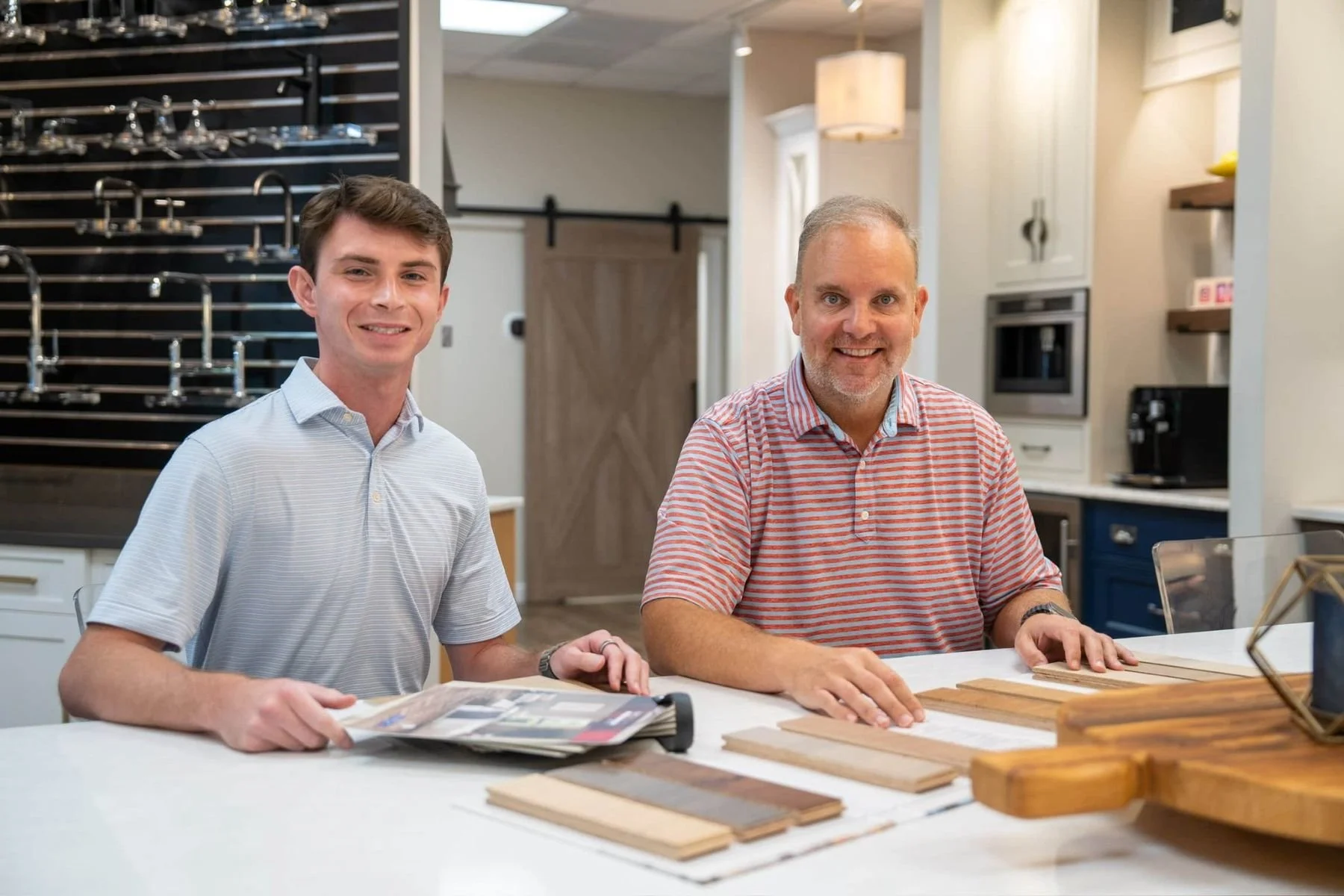
Plan Your Tuscaloosa Kitchen Remodel with Toulmin Kitchen & Bath
Flooring is only one piece of a successful kitchen renovation. The best results come from considering your floors alongside the cabinetry, countertops, backsplash, lighting, appliances, layout, and the way your family uses the space.
At Toulmin Kitchen & Bath, our team helps homeowners throughout Tuscaloosa and the surrounding West Alabama area plan kitchens that balance beauty with everyday functionality. From developing the layout and selecting cabinetry to coordinating materials and finishes, we can help bring the different pieces of your kitchen remodel together into one cohesive design.
Whether you're drawn to timeless hardwood, durable tile, family-friendly LVP, engineered wood, or RevWood, we'll help you consider how your flooring choice works with the rest of your kitchen and your home.
Call us at (205) 579-8392 or schedule an appointment online.
More Design Inspiration You’ll Love!