How to Choose the Right Range Hood for Your Kitchen
A range hood may not be the first feature you think about when planning a kitchen remodel, but it can make a noticeable difference in how your kitchen looks, feels, and functions. The right ventilation system helps remove smoke, airborne grease, excess moisture, heat, and cooking odors before they spread throughout your home.
Range hoods are also becoming an increasingly important design element. From streamlined stainless steel models to custom cabinetry-style enclosures, today’s options can either blend quietly into the kitchen or become a striking focal point.
Before choosing a range hood, it is important to consider more than appearance. The size of your cooking surface, kitchen layout, appliance type, ductwork, airflow, and noise level all affect which ventilation system will perform best.
Why Kitchen Ventilation Matters
Cooking can release steam, grease particles, odors, and other airborne pollutants into your home. Proper ventilation helps capture these contaminants near the cooking surface and exhaust them outdoors. The EPA recommends using a range hood that vents outside whenever you cook and leaving it on for approximately 10 to 20 minutes after cooking is complete.
Effective ventilation can also help:
Reduce lingering food odors
Limit grease buildup on cabinets, walls, and ceilings
Remove excess heat and moisture
Improve indoor air quality
Make routine kitchen cleaning easier
For the best performance, choose a hood that vents directly outdoors. Recirculating or ductless models filter the air before returning it to the kitchen, but they do not remove heat, moisture, and pollutants as effectively as a properly installed ducted system.
Types of Range Hoods for Kitchen Ventilation
Your kitchen layout and cooking habits will help determine which hood configuration works best.
Under-Cabinet Range Hoods
An under-cabinet hood is installed beneath the cabinetry directly above the range. These models are often compact and work well in kitchens where preserving cabinet storage is a priority.
Ductwork may run through the wall behind the hood or upward through the cabinet. Some under-cabinet models feature a slim profile or a pull-out canopy that remains concealed when it is not being used.
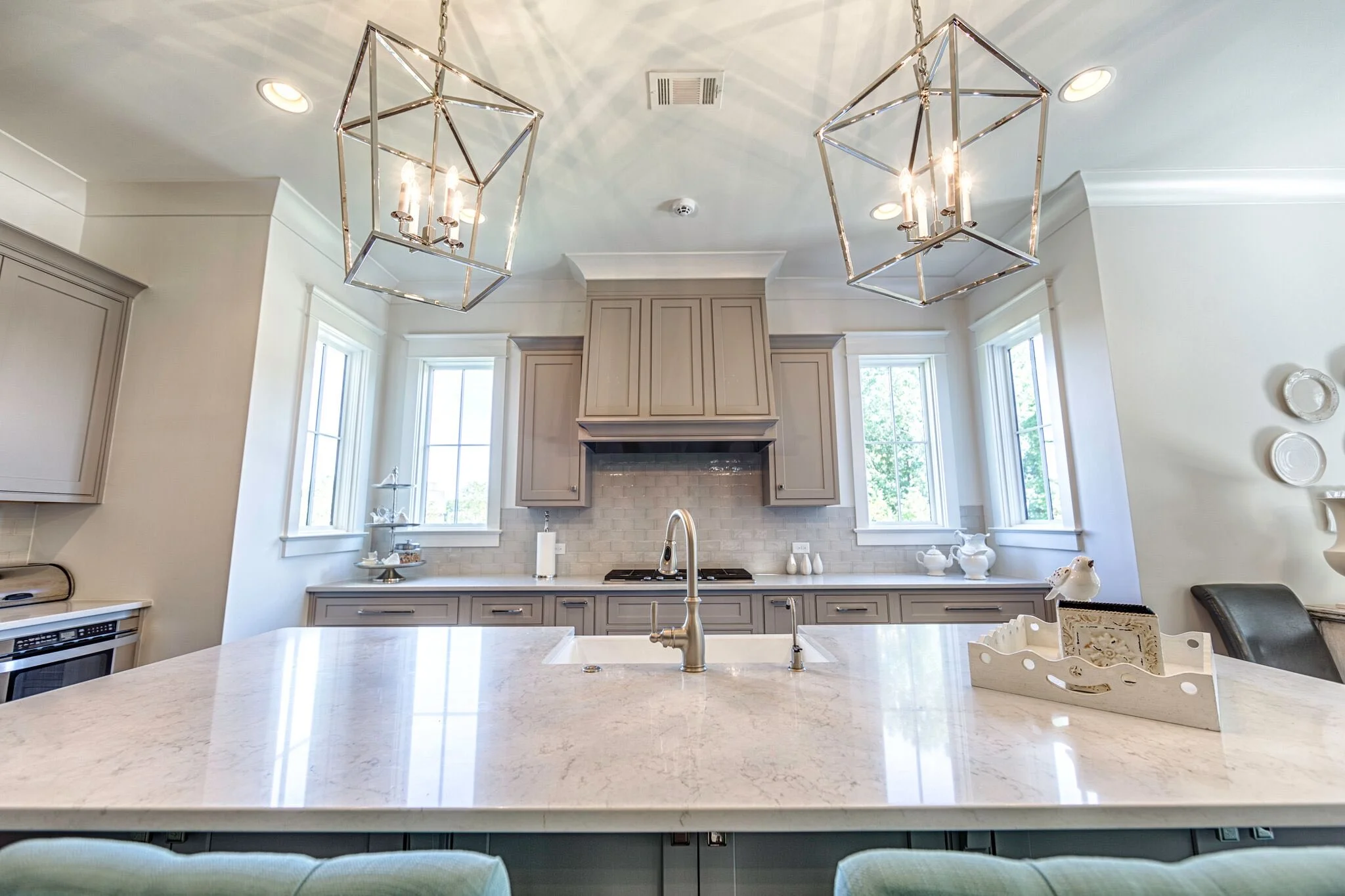
Wall-Mounted Chimney Hoods
Wall-mounted hoods are installed above a range positioned against a wall, typically without cabinets directly overhead. The visible chimney extends toward the ceiling and conceals the ductwork.
These hoods are available in stainless steel, glass, mixed metals, and other decorative finishes. A wall-mounted range hood can create a strong focal point, particularly in transitional, contemporary, or industrial-style kitchens.
Custom Range Hood Inserts
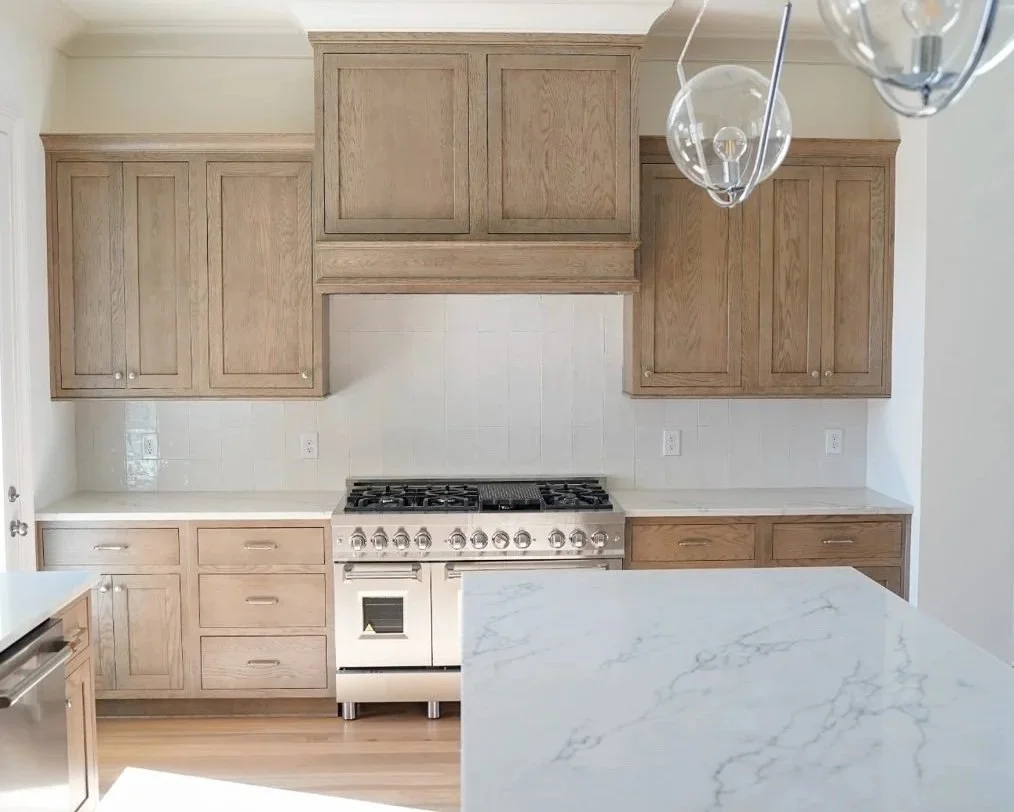
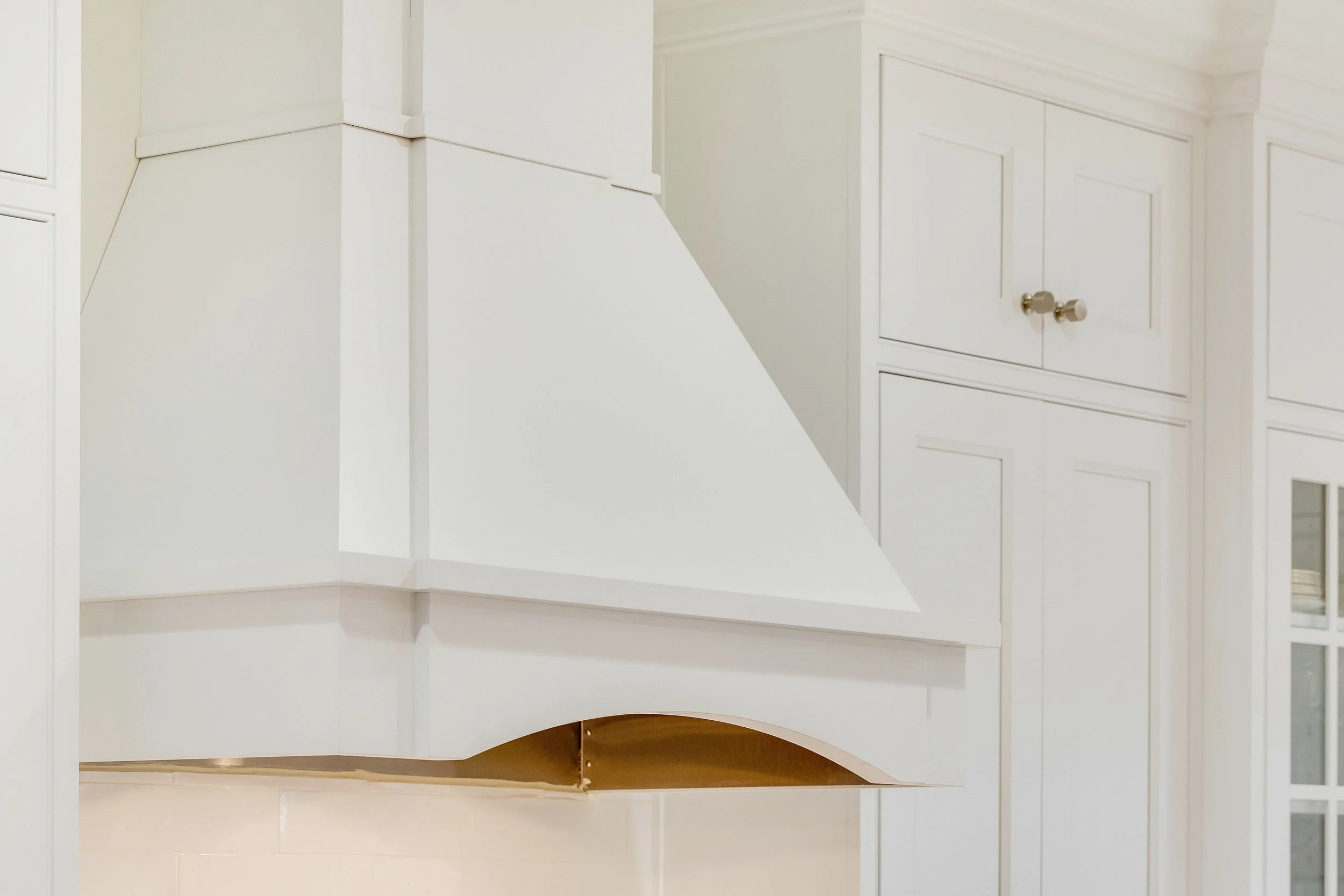
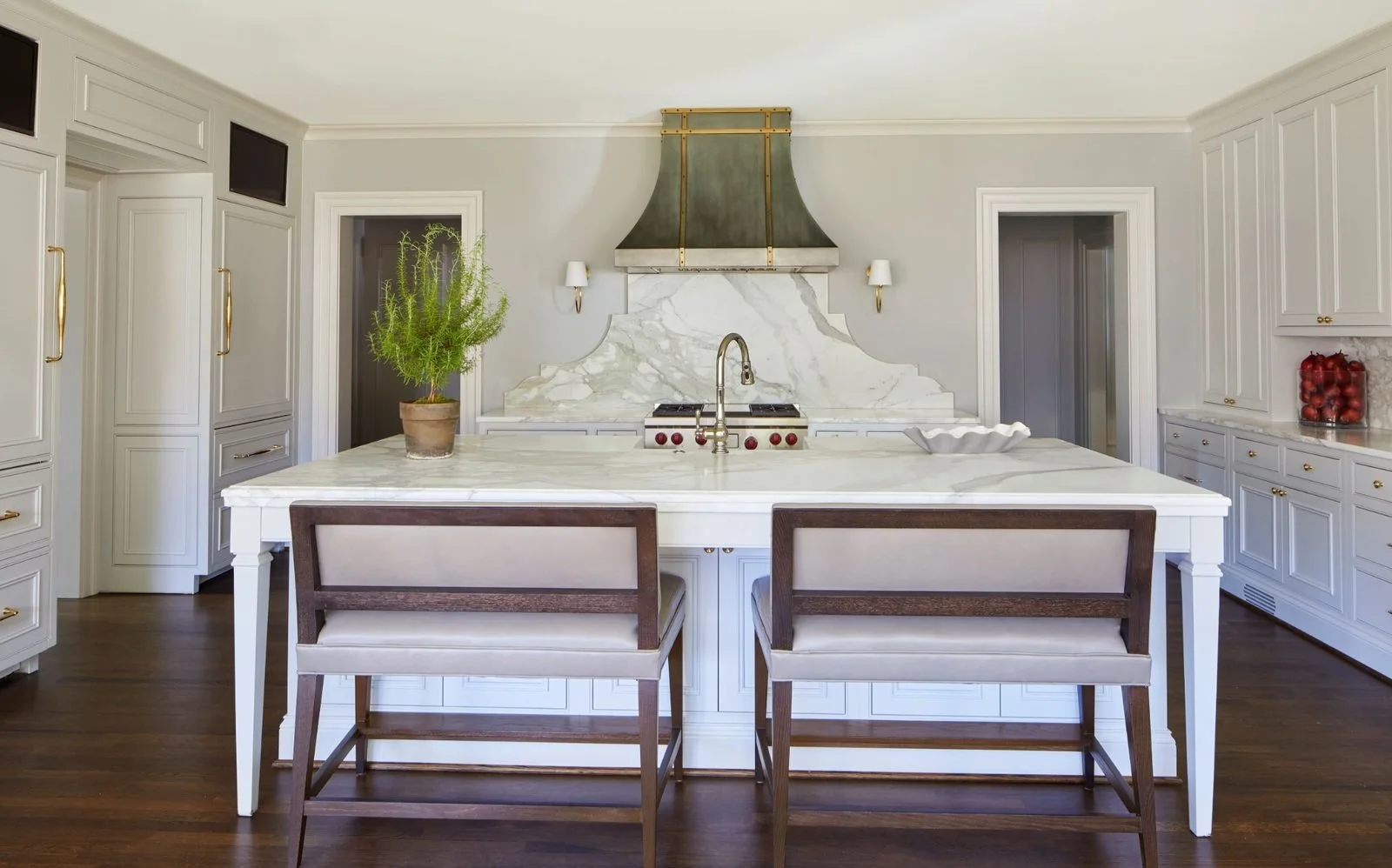
A range hood insert contains the fan, controls, lights, and filters but is designed to fit inside a custom-built enclosure. The surrounding hood can be finished in cabinetry, painted wood, plaster, stone, metal, or another material that complements the kitchen.
Custom range hood designs are especially popular in kitchens where homeowners want the ventilation system to coordinate with the cabinetry and architectural details.
Island Range Hoods
Island hoods are suspended from the ceiling above a cooktop located in a kitchen island. Because there are no walls or surrounding cabinets to help contain smoke and steam, an island hood often needs a larger capture area than a comparable wall-mounted model.
Ceiling height, duct placement, sightlines, lighting, and the overall scale of the room should all be considered before selecting an island hood.
Downdraft Ventilation
Downdraft systems pull air downward through vents located beside or behind the cooking surface. Some models remain visible, while others rise from the countertop when activated and retract when not in use.
Downdraft ventilation may be considered when overhead ductwork is impractical or when homeowners want to preserve an open view above an island. However, because hot air and cooking emissions naturally rise, downdraft systems may require more airflow to capture contaminants effectively.
Over-the-Range Microwave Hoods
An over-the-range microwave combines cooking and ventilation functions in one appliance. This configuration can conserve space, but its capture area and ventilation capacity may be more limited than those of a dedicated range hood.
Some microwave hoods can be ducted outdoors, while others operate as recirculating systems. Confirm the installation method before making a selection.
Ducted vs. Ductless Range Hoods
One of the most important decisions is whether your range hood will vent outdoors or recirculate air back into the kitchen.
A ducted range hood moves cooking exhaust through a metal duct and releases it outside the home. This is generally the preferred option because it removes heat, moisture, odors, and airborne contaminants from the kitchen.
A ductless range hood pulls air through grease and charcoal filters before returning it to the room. Ductless models may be useful when exterior venting is not possible, but the filters require regular replacement, and the system cannot remove moisture or heat from the kitchen.
When possible, plan the ventilation route early in the remodeling process. The Home Ventilating Institute recommends using properly sized, smooth metal ductwork with the shortest and straightest route possible. Excessive bends, long duct runs, and undersized ducts can reduce airflow and increase noise.
How Wide Should a Range Hood Be?
A range hood should generally be at least as wide as the cooking surface beneath it. A 36-inch range, for example, should typically have a hood that is at least 36 inches wide.
For an island cooktop, designers may recommend a hood that extends several inches beyond the cooking surface because the system does not have a wall or cabinets to help contain the rising air.
The hood’s depth is also important. A shallow hood that does not adequately cover the burners may allow smoke and steam to escape into the room, even when the fan has a high airflow rating.
Always follow the hood and appliance manufacturers’ recommendations for width, depth, and mounting height.
How Much CFM Does a Range Hood Need?
Range hood airflow is measured in cubic feet per minute, or CFM. A higher CFM rating means the fan can move more air, but more power does not automatically guarantee better performance.
The appropriate CFM depends on several factors:
The width and type of cooking appliance
Whether the appliance uses gas, induction, or electricity
The amount and type of cooking performed
The hood’s mounting height and capture area
The length and configuration of the ductwork
Whether the cooktop is against a wall or located in an island
Homeowners who frequently fry, sear, grill, or cook with multiple burners may need more ventilation than those who primarily use their range for light cooking.
Avoid selecting a hood based on CFM alone. A well-proportioned hood with an effective capture area and properly designed ductwork may perform better than a high-powered fan installed too far above the cooking surface.
When Is Makeup Air Required?
Powerful range hoods remove a significant amount of air from the home. That exhausted air may need to be replaced through a makeup air system, particularly in newer, tightly sealed homes.
Under current International Residential Code provisions, certain exhaust systems exceeding 400 CFM may require makeup air when specific fuel-burning appliances are located within the home’s air barrier. Local requirements can vary depending on the code adopted in your area and the conditions inside the home.
Your kitchen designer, HVAC professional, contractor, and local building official can help determine whether makeup air is needed. This should be discussed early, as it can affect the ventilation design, mechanical systems, budget, and permitting process.
Range Hood Features Worth Considering
Beyond size and airflow, several features can make a hood easier and more pleasant to use.
Sound Ratings
Range hood sound is commonly measured in sones. A lower sone rating indicates quieter operation. Because homeowners are more likely to use a hood consistently when it is not excessively loud, noise should be considered alongside airflow.
Properly sized ductwork can also reduce turbulence and operating noise.
Multiple Fan Speeds
Multiple speeds allow you to adjust ventilation based on the type of cooking. A low setting may be enough for simmering, while a higher setting can help manage smoke or strong odors from frying and searing.
Built-In Lighting
Integrated lighting improves visibility over the cooking surface. Look for bright, energy-efficient lighting with controls that are easy to reach.
Automatic Controls
Some range hoods include heat sensors, automatic fan activation, delayed shutoff timers, or connectivity with compatible cooking appliances.
Easy-to-Clean Filters
Grease filters should be easy to remove and clean. Some stainless steel baffle and mesh filters are dishwasher-safe, although the manufacturer’s care instructions should always be followed.
Tips for Using Your Range Hood Effectively
Even a well-designed ventilation system must be used correctly. Turn the hood on shortly before cooking begins so airflow is already established. When possible, cook on the back burners, where the hood is often better able to capture emissions. Leave the fan running for 10 to 20 minutes afterward to help remove remaining odors and particles.
Clean grease filters regularly and replace charcoal filters according to the manufacturer’s instructions. Heavy buildup can restrict airflow and reduce performance.
Designing a Range Hood That Works With Your Kitchen
A range hood should be selected as part of the overall kitchen plan rather than treated as a last-minute appliance decision. Cabinet dimensions, ceiling height, ductwork, lighting, appliance specifications, and architectural details all need to work together.
At Toulmin Kitchen & Bath, our designers help homeowners throughout Tuscaloosa, Birmingham, Mountain Brook, and surrounding Alabama communities select kitchen ventilation that supports both the design and everyday functionality of the space.
Whether you prefer a discreet hood insert, a custom cabinetry-style enclosure, or a statement-making metal hood, thoughtful planning can help ensure that your ventilation system performs as beautifully as it looks.
Ready to begin planning your kitchen remodel? Contact Toulmin Kitchen & Bath to schedule a design consultation.
Frequently Asked Questions About Range Hoods
Is a ducted range hood better than a ductless range hood?
A ducted hood is generally more effective because it exhausts smoke, moisture, heat, grease particles, and odors outdoors. A ductless hood filters the air and returns it to the kitchen, making it an alternative when exterior venting is not possible.
Should a range hood be wider than the stove?
The hood should be at least as wide as the cooking surface. Island hoods may need to be several inches wider to improve capture because there are no surrounding walls or cabinets.
How high should a range hood be installed?
The correct mounting height depends on the hood design, cooking appliance, fuel type, and manufacturer. Always follow the installation requirements provided for both the hood and the range or cooktop.
Do electric and induction cooktops need ventilation?
Yes. Although they do not produce combustion gases, cooking on electric and induction surfaces can still release steam, smoke, grease particles, odors, and other airborne contaminants.
How often should range hood filters be cleaned?
Cleaning frequency depends on how often and what you cook. Check grease filters regularly and follow the manufacturer’s care instructions. Charcoal filters used in ductless systems must be replaced periodically rather than simply cleaned.
More Kitchen Design Advice and Inspiration!